Which Is Better, Brother or Janome? The Verdict by Need
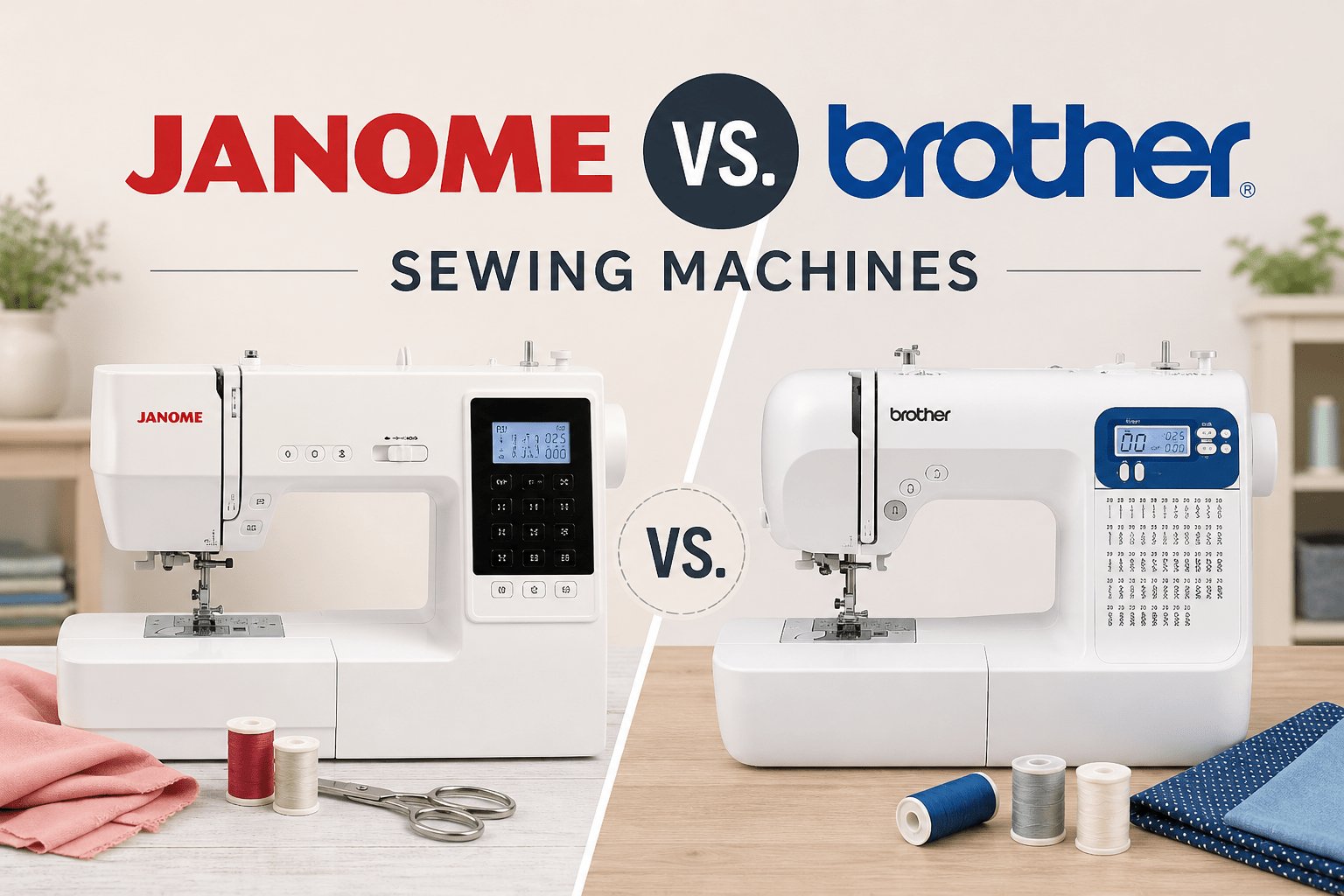
Brother wins on price and built-in stitches, while Janome leads in stitch quality and long-term durability. Choosing between a Brother or Janome machine depends on what you sew and how often you sit at it. Brother fits a tight budget and casual projects. Janome costs more upfront but handles heavy fabrics without skipping. Pick the one that matches your actual sewing habits.
Brother vs Janome: why they feel different

The gap between these two brands comes down to where each company spends its engineering effort. Brother builds machines packed with features at prices that don’t scare away first-time buyers. Janome focuses on the mechanics inside the housing, aiming for smooth fabric feeding and consistent tension across every project.
You’ll notice this difference the moment you push thick denim through the needle. A Brother might pause or skip if the layers get too heavy. A Janome typically pulls the same stack through without changing its rhythm. That mechanical focus is exactly why quilters and garment makers lean toward Janome for daily work.
If you only mend clothes or sew simple cotton projects on weekends, Brother gives you everything you need. You shouldn’t pay for heavy-duty mechanics you won’t use. But if you plan to sew every week or work with canvas and leather, Brother’s lighter internal parts will wear out faster.
| Cause of preference | How common | How to confirm it | Fix it yourself? |
|---|---|---|---|
| Budget limits the choice | Most of the time | Compare retail prices online | Yes |
| Sewing thick or layered fabrics | Very common | Test denim stacks in store | No |
| Needing many decorative stitches | Common | Read the spec sheet | Yes |
| Quilting large blankets | Less common | Check throat space measurement | Yes |
| Wanting computerized embroidery | Less common | Check built-in design count | Yes |
| Machine skipping stitches | Rare | Rethread and change needle | Yes with care |
| Internal gear wear over years | Rare | Listen for grinding noises | No |
Brother’s lighter build and feature focus
Brother packs more electronic features into a smaller price tag by using lighter internal components. This approach works perfectly for cotton, linen, and basic garment repairs. The trade-off is that those lighter gears and plastic feed dogs struggle when you push them through multiple layers of heavy material.
If you mostly sew light fabrics, choose Brother; if you sew bags or jeans weekly, pick Janome. That single rule saves you from buying a machine that fights your projects. Brother models like the CS series give you over 100 built-in stitches for a fraction of what a comparable Janome costs.
To confirm a Brother model fits your needs, check the maximum presser foot lift in the manual. A lift under 6mm means thick seams will jam the foot. Don’t guess the clearance by looking at the machine in its box.
Fixing a skipped stitch on a Brother usually just means switching to a heavier needle and slowing your foot pedal down. It takes about two minutes and costs nothing if you already have assorted needles. Forcing thick fabric through a machine not built for it bends the needle bar, which turns a free fix into a repair bill bigger than the machine itself.
Janome’s heavier mechanics and stitch precision

Janome puts its money into metal internal frames and precise feed mechanisms instead of extra digital screens. You can tell this apart from Brother’s approach by feeling the machine’s weight and listening to the motor hum evenly under load. That solid base stops the needle from deflecting when it hits a tough seam.
This matters because a deflecting needle causes uneven stitches and broken threads. Janome’s box feed system moves the fabric flat rather than dragging it in an arc. The result is straighter lines on quilts and matching seams on dresses without constant adjusting.
Confirming this advantage means sewing a test square with four layers of denim. Time how long it takes and look at the back of the fabric. Janome finishes the square smoothly, while lighter machines leave puckered thread or stop entirely.
You won’t find hundreds of decorative stitches on entry-level Janome models. You’re paying for the motor and the frame, not the software. That trade-off frustrates people who want variety on day one. But if your goal is clean construction seams, the extra weight does the work for you.
Throat space and quilting differences
Quilters hit a wall when the space between the needle and the machine’s right side is too small. Brother’s standard sewing machines offer around 6 to 7 inches of throat space. Janome’s mid-range models often provide slightly more room, and their long-arm options go much further.
Rolling a queen-sized quilt through a 6-inch gap forces you to fight the fabric constantly. The bulk pushes against the needle, causing skipped stitches or uneven tension. If you quilt anything larger than a baby blanket, measure that gap before you buy.
Check the product specifications for “harp space” or “throat width.” Don’t trust photos, as camera angles hide the real dimensions. A difference of just one inch changes how easily a heavy quilt rolls.
This isn’t for someone who only hems pants or makes pillowcases. If your projects stay flat and small, throat space doesn’t matter. Paying extra for a wide bed you never use just drains your budget. But if you fold large fabrics, that single inch decides whether the project is enjoyable or exhausting.
Rare reasons one brand fails you
Sometimes the problem isn’t the brand’s general reputation but a specific mismatch with your habits. These issues happen in a small number of cases, but they completely ruin the experience when they do.
- Bobbin timing slips after a crash: The needle hits a pin and knocks the hook out of alignment, causing loops on the bottom of the fabric.
- Software glitches on computerized screens: Touchscreens freeze when firmware gets outdated, locking you out of your stitch settings.
- Motor brushes wear out early: Running a light-duty machine at top speed for hours burns the carbon brushes, killing power.
- Feed dog teeth strip on heavy canvas: Pushing stiff material wears down the metal teeth until the fabric stops moving forward.
Fixing bobbin timing or replacing motor brushes requires opening the machine’s sealed housing. Doing this without training strips screws or breaks delicate sensors. Stop here and take it to an authorized service center. Guessing the repair path voids your warranty and risks electrical shock.
What fixing or upgrading actually demands

Solving a tension issue or a skipped stitch usually takes five minutes and a fresh needle. You don’t need tools for this. Just follow the threading diagram printed on the machine’s body.
Replacing a presser foot or adding a walking foot costs about the same as a few spools of good thread. Snap-on feet need no screwdrivers. Screw-on types require the small L-wrench included in your accessory box.
If the motor sounds like it’s grinding, you’ve crossed the line from home maintenance to professional repair. Sending a machine to a technician costs roughly the same as buying a new entry-level Brother. Get a written quote before handing it over.
Don’t assume a louder noise means a cheap part broke. Sometimes it means the wrong part was forced past its limit. Your user manual lists exactly which tasks your specific model handles. Check that list before blaming the brand.
Frequently asked questions
Why do quilters prefer Janome over Brother?
Janome offers wider throat space and heavier feed dogs that handle thick quilt sandwiches without stalling. Brother’s lighter frames struggle when you push folded batting through the needle. If you quilt weekly, that mechanical difference prevents constant frustration.
Can Brother machines sew thick denim?
Yes, but only up to three or four layers on their standard household models. Use a size 16 denim needle and slow your foot pedal down. Pushing more than that bends the needle bar, so switch to a heavy-duty model for jeans.
How long does a Janome sewing machine last?
A well-maintained Janome lasts significantly longer than most competitors for regular home use. Brother’s lighter models typically run fewer years under the same weekly workload. The exact lifespan depends on how often you sew heavy fabrics and whether you oil the hook race.
Is it safe to buy a used Brother?
Yes, if you test the handwheel and listen for clicking sounds first. Turn the wheel toward you by hand before plugging it in. Grinding means worn gears, and replacing them costs more than the machine’s current value.
What happens if I use the wrong bobbins?
The thread jams inside the bobbin case and snaps the needle. Brother and Janome use different bobbin shapes, even when both are class 15 style. Always match the exact plastic or metal type listed in your manual.
Does it matter which brand I pick for embroidery?
It matters if you want built-in designs versus custom software. Brother dominates the home embroidery market with affordable hoops and USB imports. Janome focuses more on precision sewing, though their higher-end models handle embroidery beautifully.
How often should I oil my machine?
Oil the hook race after every 8 to 10 hours of active sewing time. Check your manual first, because some newer Brother models have sealed bearings that never take oil. Adding drops to a sealed unit ruins the electronics.
Conclusion
Before you buy, visit a local shop and sew a few seams on both machines. You’ll feel the difference in how the fabric feeds under the presser foot. Trust your hands over the spec sheet, and you won’t regret your choice when you’re deep into your next project.
{“@context”:”https://schema.org”,”@type”:”FAQPage”,”mainEntity”:[{“@type”:”Question”,”name”:”Why do quilters prefer Janome over Brother?”,”acceptedAnswer”:{“@type”:”Answer”,”text”:”Janome offers wider throat space and heavier feed dogs that handle thick quilt sandwiches without stalling. Brother’s lighter frames struggle when you push folded batting through the needle. If you quilt weekly, that mechanical difference prevents constant frustration.”}},{“@type”:”Question”,”name”:”Can Brother machines sew thick denim?”,”acceptedAnswer”:{“@type”:”Answer”,”text”:”Yes, but only up to three or four layers on their standard household models. Use a size 16 denim needle and slow your foot pedal down. Pushing more than that bends the needle bar, so switch to a heavy-duty model for jeans.”}},{“@type”:”Question”,”name”:”How long does a Janome sewing machine last?”,”acceptedAnswer”:{“@type”:”Answer”,”text”:”A well-maintained Janome lasts significantly longer than most competitors for regular home use. Brother’s lighter models typically run fewer years under the same weekly workload. The exact lifespan depends on how often you sew heavy fabrics and whether you oil the hook race.”}},{“@type”:”Question”,”name”:”Is it safe to buy a used Brother?”,”acceptedAnswer”:{“@type”:”Answer”,”text”:”Yes, if you test the handwheel and listen for clicking sounds first. Turn the wheel toward you by hand before plugging it in. Grinding means worn gears, and replacing them costs more than the machine’s current value.”}},{“@type”:”Question”,”name”:”What happens if I use the wrong bobbins?”,”acceptedAnswer”:{“@type”:”Answer”,”text”:”The thread jams inside the bobbin case and snaps the needle. Brother and Janome use different bobbin shapes, even when both are class 15 style. Always match the exact plastic or metal type listed in your manual.”}},{“@type”:”Question”,”name”:”Does it matter which brand I pick for embroidery?”,”acceptedAnswer”:{“@type”:”Answer”,”text”:”It matters if you want built-in designs versus custom software. Brother dominates the home embroidery market with affordable hoops and USB imports. Janome focuses more on precision sewing, though their higher-end models handle embroidery beautifully.”}},{“@type”:”Question”,”name”:”How often should I oil my machine?”,”acceptedAnswer”:{“@type”:”Answer”,”text”:”Oil the hook race after every 8 to 10 hours of active sewing time. Check your manual first, because some newer Brother models have sealed bearings that never take oil. Adding drops to a sealed unit ruins the electronics.”}}]}