Which Machine Does a Tailor Use? The Straight-Stitch Answer
A tailor uses an industrial straight-stitch sewing machine for most garment work, typically a single-needle lockstitch model that handles about 80% of everyday alterations and can be identified by its flat metal bed and large motor underneath, which feed fabric smoothly under one needle as seen on any tailor’s bench.
Sewing machines tailors rely on every day

Tailors keep more than one machine around. The straight-stitch model stays in the main spot. Other machines handle specialized tasks. Here are the models you’ll see in a real shop, ranked by how often they run.
| Machine type | How common | How to confirm it | Fix it yourself? |
|---|---|---|---|
| Industrial straight stitch | Most used daily | Flat bed, one needle | Yes with care |
| Overlock or serger | Very common | Cuts edge, loops thread | Yes |
| Blind hem machine | Common in shops | Curved needle, folding guide | Yes |
| Walking foot machine | Used for heavy fabrics | Top feed dog moves fabric | No |
| Cylinder bed machine | Used for sleeves | Narrow round arm | No |
| Buttonhole machine | Rarely seen | Clamps fabric, cuts hole | No |
If you sew light cottons, pick the straight stitch; if you work thick leather, switch to the walking foot. Forcing denim through a standard presser foot ruins the needle. That costs unplanned time and parts. Check the motor housing label for exact wattage.
The industrial straight-stitch machine
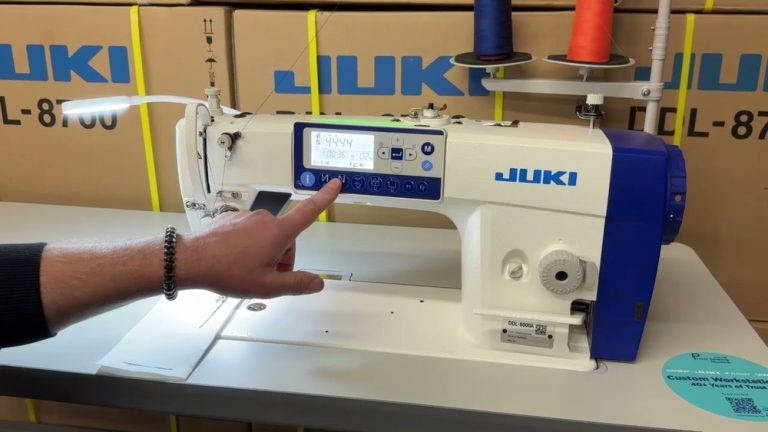
An industrial straight-stitch machine runs a single needle up and down while a feed dog pulls the fabric forward. It makes a tight lockstitch using two threads, one from the top spool and one from the bobbin below. Tailors prefer it because the flat metal bed supports the whole garment. That support stops the cloth from dragging and puckering during long seams.
Stitches should look identical on both sides. To test it, thread the machine and sew a 6-inch line on two layers of medium-weight cotton. Set the dial to 3 millimeters per stitch for woven fabrics like poplin or twill. If the bottom thread loops, the bobbin tension needs adjusting. Turn the tiny screw on the bobbin case a quarter turn clockwise.
Threading takes about two minutes once you know the path. Oil the moving joints once a week if you run it daily, using clear sewing machine oil only. Dry metal parts wear out fast and seize up. Replacing a seized hook assembly is costly. The Juki DDL-8700 product page lists the full threading diagram and oil points for this popular model. Keep the manual near the bench.
The overlock machine for finishing edges
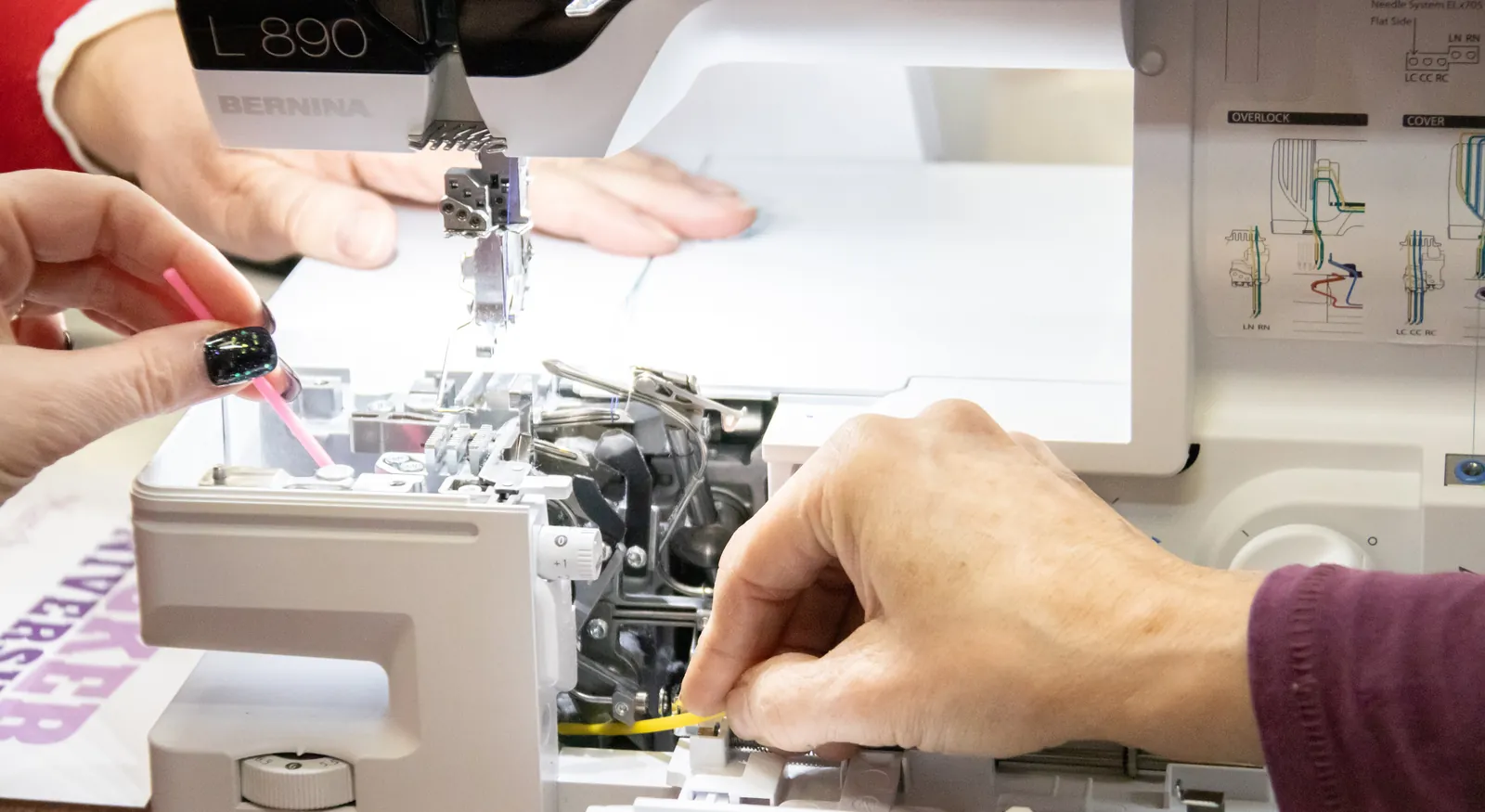
An overlock machine, also called a serger, trims the raw edge and wraps it in thread at the same time. You can tell it apart from the straight-stitch model because it has three to five thread cones on top. It doesn’t use a standard bobbin at all. Instead, loopers cross the threads over the cut edge to stop fraying.
Tailors use it right after cutting fabric to keep the edges clean before sewing the main seams. Run it on knit fabrics like jersey, where a straight stitch would snap when the cloth stretches. For wovens, a 4-thread setup gives a strong safety stitch alongside the trim. Set the differential feed dial to 1.0 for flat cotton, but raise it to 1.5 for stretchy knits so the seam doesn’t wave.
Testing it requires a scrap piece of the actual fabric you plan to use. Sew 4 inches and pull the seam gently sideways. If the threads break, the tension dials are too tight. Loosen them one number at a time until the stitch lies flat without snapping. Changing the thread path takes about five minutes per cone, so plan for twenty minutes when switching colors completely.
The blind hem machine for invisible stitching
A blind hem machine folds the fabric and catches just one or two threads of the outer layer. It leaves no visible line on the front of trousers or skirts. You’ll recognize it by the curved needle and the metal folding guide on the bed. Tailors use it almost exclusively for hemming dress pants and suit jackets.
To set it up, fold the hem allowance back so the raw edge sits slightly past the fold line. Place that edge against the guide plate. The needle must swing far enough to bite the fold but not pierce all the way through. Adjust the stitch width dial to 2 millimeters for thin wool, or up to 4 millimeters for heavy tweed.
Test the bite on a hidden part of the hem first. If you see dots of thread on the outside, the needle goes too deep. Back off the width dial one click and try again. Getting this wrong means ripping out the whole hem and pressing the crease out, which wastes half an hour. A proper setup takes ten minutes once the guide is aligned to your specific fabric thickness.
Rare machines found in specialty shops
Some tasks require equipment that only sits in larger alteration rooms or factories.
- Walking foot machines move the top layer of fabric with the bottom layer, which you need for thick leather coats.
- Cylinder bed machines have a narrow round arm that lets you slide a finished sleeve over it for repairs.
- Buttonhole machines clamp the cloth and cut the slit automatically, leaving a perfectly bound hole every time.
- Bartack machines sew dense zigzag knots at stress points like pocket corners or belt loops.
- Coverstitch machines create the double parallel lines you see on the hems of store-bought t-shirts.
If a repair involves opening the motor casing or replacing internal wiring, stop there. Only a qualified technician should open those panels or test electrical parts. Your own checks end at the settings, the needle, and the power cord.
What fixing and running these machines demands

Keeping a tailor’s machines running takes routine attention rather than heavy labor. Daily work means wiping lint from the feed dogs and checking the needle for burrs. You’ll need small screwdrivers, tweezers, and clear sewing machine oil for weekly upkeep. Replacing a bent needle takes thirty seconds and costs less than a cup of coffee.
Fixing timing issues or replacing gears demands a trained mechanic. Call a certified dealer to get a real quote before agreeing to major work.
Don’t buy cheap household bobbins for an industrial machine. They don’t fit the tight tolerances, and they cause skipped stitches that ruin garments. Always match the bobbin style printed in your user manual.
Frequently asked questions
Can a regular home sewing machine do tailor work?
No, a home machine lacks the motor power and flat bed space needed for heavy daily use. Tailors need industrial motors that run continuously without overheating.
Why does my needle keep breaking on thick fabric?
The needle size is too small for the material you’re pushing through it. Switch to a size 16 or 18 needle for denim or canvas.
How long does it take to learn an overlock machine?
Expect about 2 weeks of daily practice to thread and adjust tension confidently. Once you memorize the path, setup drops to under 5 minutes.
Is it safe to oil the machine while it’s plugged in?
Never oil a sewing machine while it’s connected to power. Unplug it first to prevent accidental starts that could catch your fingers. Apply one drop of clear sewing machine oil to each moving joint.
What happens if the bobbin tension is too loose?
Loose bobbin tension leaves messy loops of thread on the bottom side of your seam. Tighten the small screw on the bobbin case by a quarter turn. Test on scrap cloth until both sides look smooth.
Does the stitch length matter for different fabrics?
Yes, short stitches pucker light silk while long stitches leave gaps in heavy wool. Set the dial to 2 millimeters for sheer fabrics and 3 to 4 millimeters for standard cottons. Leather needs longer stitches, around 5 millimeters, so the holes don’t tear out. Always test on a scrap first.
How often should I change the sewing needle?
Change the needle after every 8 hours of continuous sewing or at the start of a new project. A dull needle skips stitches and damages delicate fibers.
Why won’t the feed dog pull the fabric forward?
Check if the feed dog lever is lowered, which some machines use for button sewing. Raise it back up so the teeth grip the cloth. If the gears are stripped underneath, you’ll need a professional repair.
Conclusion
Every tailor builds their setup around the straight-stitch machine first, adding others as the work demands. Start by mastering that single needle, keeping it oiled, threaded right, and matched to your fabric. The rest of the equipment simply fills in the gaps that one strong lockstitch leaves behind.
{“@context”:”https://schema.org”,”@type”:”FAQPage”,”mainEntity”:[{“@type”:”Question”,”name”:”Can a regular home sewing machine do tailor work?”,”acceptedAnswer”:{“@type”:”Answer”,”text”:”No, a home machine lacks the motor power and flat bed space needed for heavy daily use. Tailors need industrial motors that run continuously without overheating.”}},{“@type”:”Question”,”name”:”Why does my needle keep breaking on thick fabric?”,”acceptedAnswer”:{“@type”:”Answer”,”text”:”The needle size is too small for the material you’re pushing through it. Switch to a size 16 or 18 needle for denim or canvas.”}},{“@type”:”Question”,”name”:”How long does it take to learn an overlock machine?”,”acceptedAnswer”:{“@type”:”Answer”,”text”:”Expect about 2 weeks of daily practice to thread and adjust tension confidently. Once you memorize the path, setup drops to under 5 minutes.”}},{“@type”:”Question”,”name”:”Is it safe to oil the machine while it’s plugged in?”,”acceptedAnswer”:{“@type”:”Answer”,”text”:”Never oil a sewing machine while it’s connected to power. Unplug it first to prevent accidental starts that could catch your fingers. Apply one drop of clear sewing machine oil to each moving joint.”}},{“@type”:”Question”,”name”:”What happens if the bobbin tension is too loose?”,”acceptedAnswer”:{“@type”:”Answer”,”text”:”Loose bobbin tension leaves messy loops of thread on the bottom side of your seam. Tighten the small screw on the bobbin case by a quarter turn. Test on scrap cloth until both sides look smooth.”}},{“@type”:”Question”,”name”:”Does the stitch length matter for different fabrics?”,”acceptedAnswer”:{“@type”:”Answer”,”text”:”Yes, short stitches pucker light silk while long stitches leave gaps in heavy wool. Set the dial to 2 millimeters for sheer fabrics and 3 to 4 millimeters for standard cottons. Leather needs longer stitches, around 5 millimeters, so the holes don’t tear out. Always test on a scrap first.”}},{“@type”:”Question”,”name”:”How often should I change the sewing needle?”,”acceptedAnswer”:{“@type”:”Answer”,”text”:”Change the needle after every 8 hours of continuous sewing or at the start of a new project. A dull needle skips stitches and damages delicate fibers.”}},{“@type”:”Question”,”name”:”Why won’t the feed dog pull the fabric forward?”,”acceptedAnswer”:{“@type”:”Answer”,”text”:”Check if the feed dog lever is lowered, which some machines use for button sewing. Raise it back up so the teeth grip the cloth. If the gears are stripped underneath, you’ll need a professional repair.”}}]}