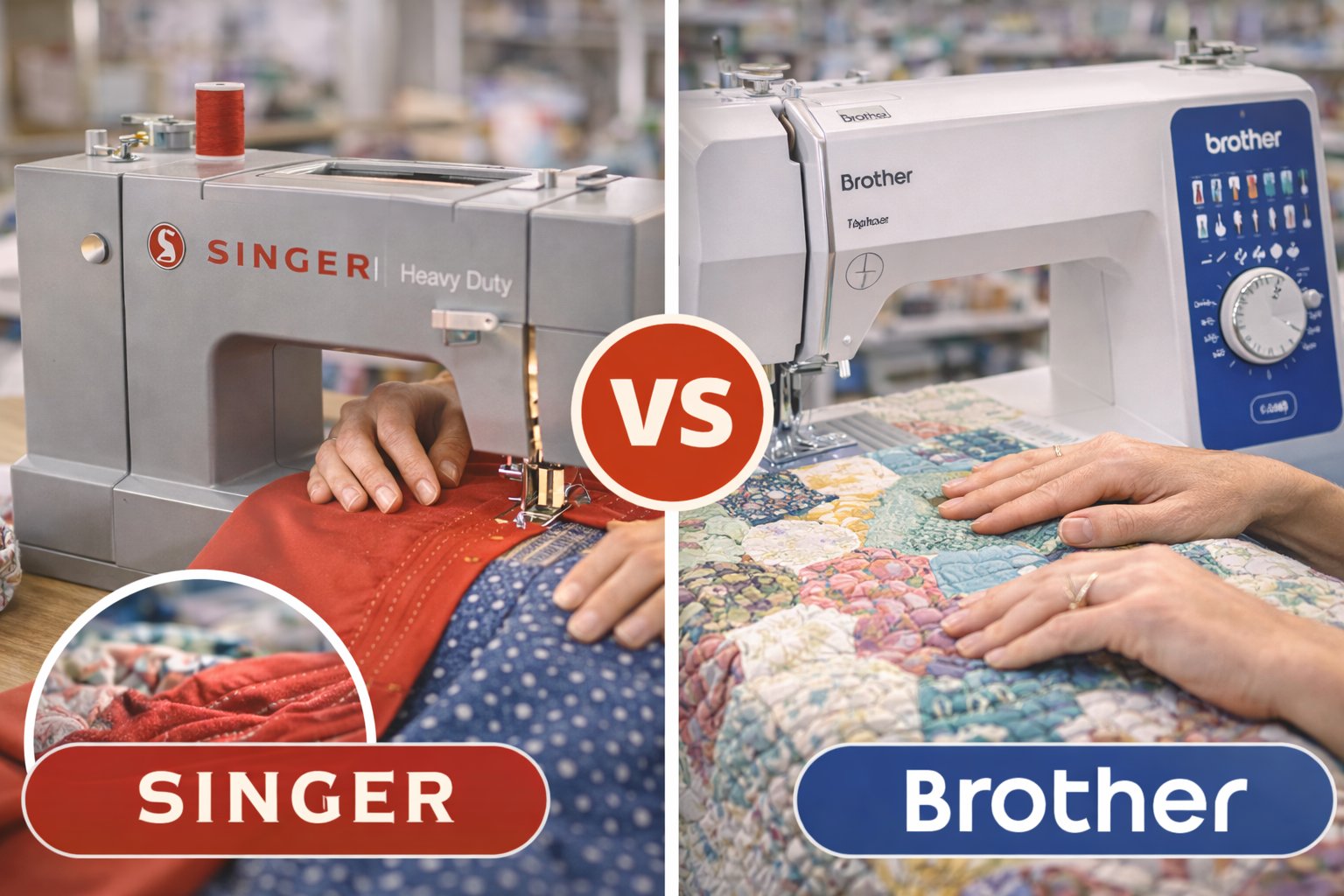
Is Brother or Singer a Better Sewing Machine? The Verdict
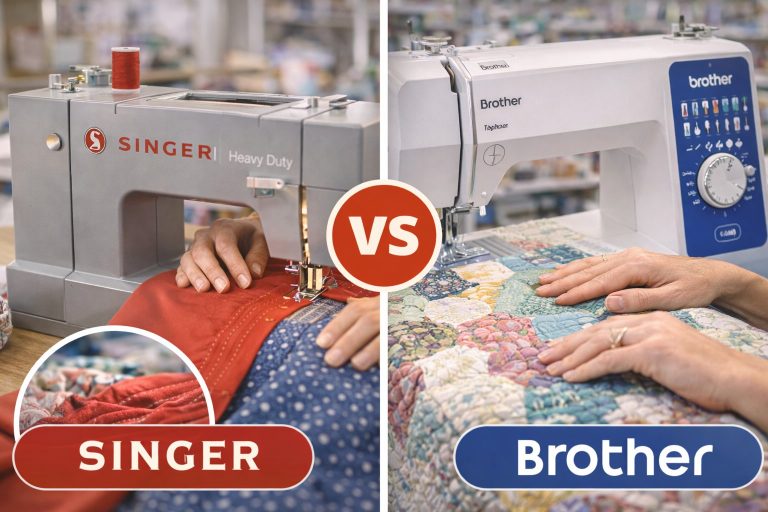
Neither brand wins every time, but the answer to whether Brother or Singer is better comes down to what you sew: Brother offers more built-in stitches and digital features on entry-level models, while Singer provides heavy metal frames for thick fabrics like denim.
Brother vs Singer sewing machine causes of trouble
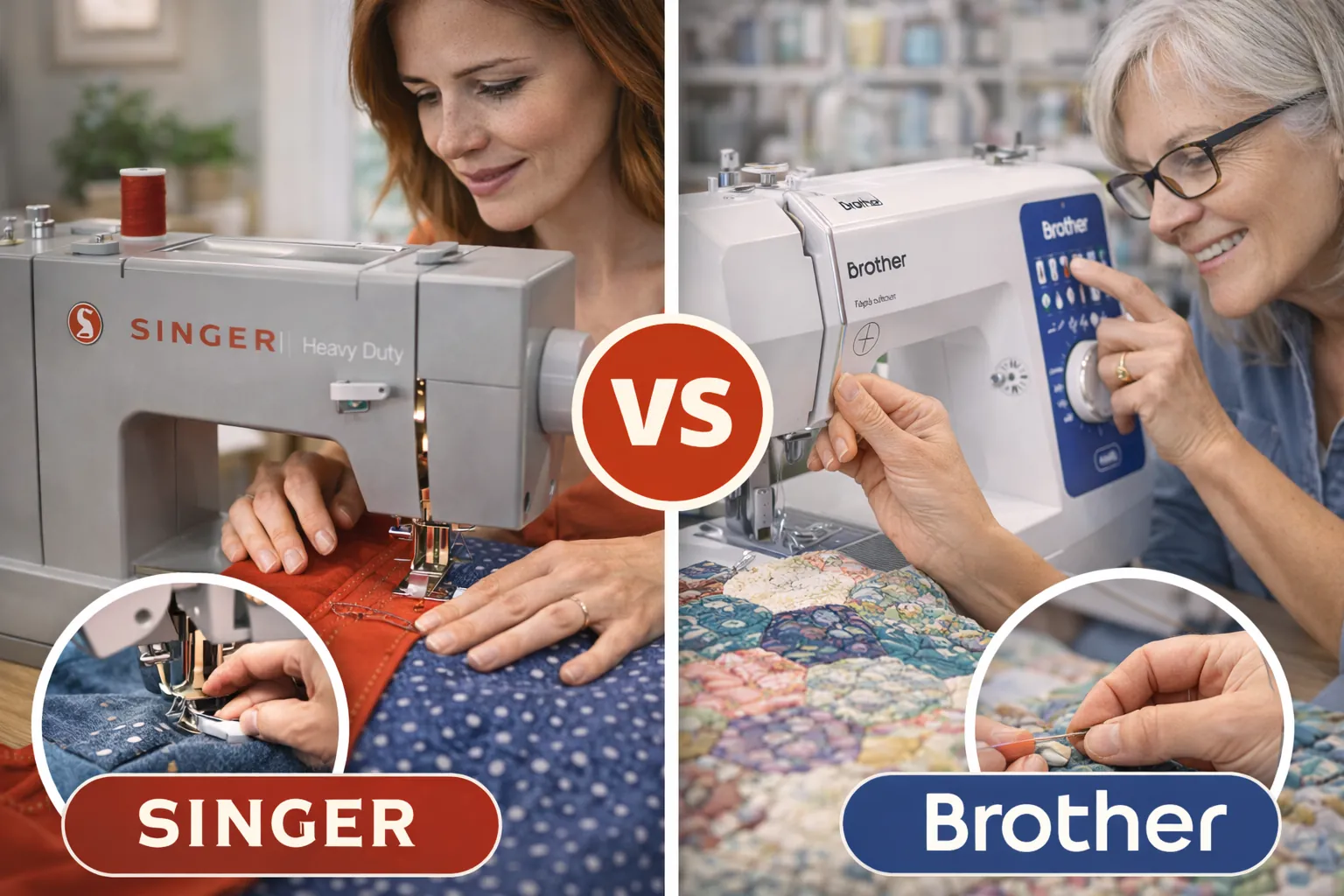
A sewing machine that skips stitches, jams, or won’t feed fabric doesn’t always mean you bought the wrong brand. The real cause is usually how the machine matches your project. A lightweight Brother struggles with leather not because it’s poorly made, but because its motor lacks the torque for thick layers. A vintage Singer might skip stitches on stretchy knit fabric simply because it was built decades before those materials were common in home sewing.
| Cause | How common | How to confirm it | Fix it yourself? |
|---|---|---|---|
| Wrong needle for fabric | Very common | Needle bends or breaks | Yes |
| Incorrect thread tension | Very common | Loops on top or bottom | Yes |
| Machine too light for fabric | Common | Motor hums but stalls | No |
| Bobbin threaded wrong | Common | Thread jams underneath | Yes |
| Lint buildup in feed dogs | Common | Fabric won’t move forward | Yes |
| Worn timing belt or gears | Rare | Loud grinding noise | No |
| Bent needle bar | Rare | Needle hits plate off-center | No |
Using the wrong needle size
A bent or broken needle is the fastest way to make any sewing machine perform badly. Brother and Singer machines both use standard flat-shank needles, but picking the wrong size ruins your stitching instantly. A fine size 70/10 needle snaps when pushed through heavy denim. A thick size 100/16 needle leaves huge holes in silk and snags lightweight cotton.
To check this, unplug the machine and remove the presser foot. Look closely at the needle tip. If it’s dull, bent even slightly, or has a burr, swap it out. Put in a new needle that matches your fabric weight.
Use size 80/12 for medium cotton, and go up to 90/14 or 100/16 for heavy canvas. This assumes standard woven fabrics; for stretchy knits, switch to a ballpoint needle of the same size so it slides between threads instead of piercing them.
Changing a needle takes about two minutes and costs almost nothing compared to replacing a whole bobbin case. Skipping this step leads to skipped stitches, shredded thread, and jammed bobbins. People often blame the machine’s brand when the needle was just too small for their project. Always match the needle to the material first.
Tension settings don’t match the thread
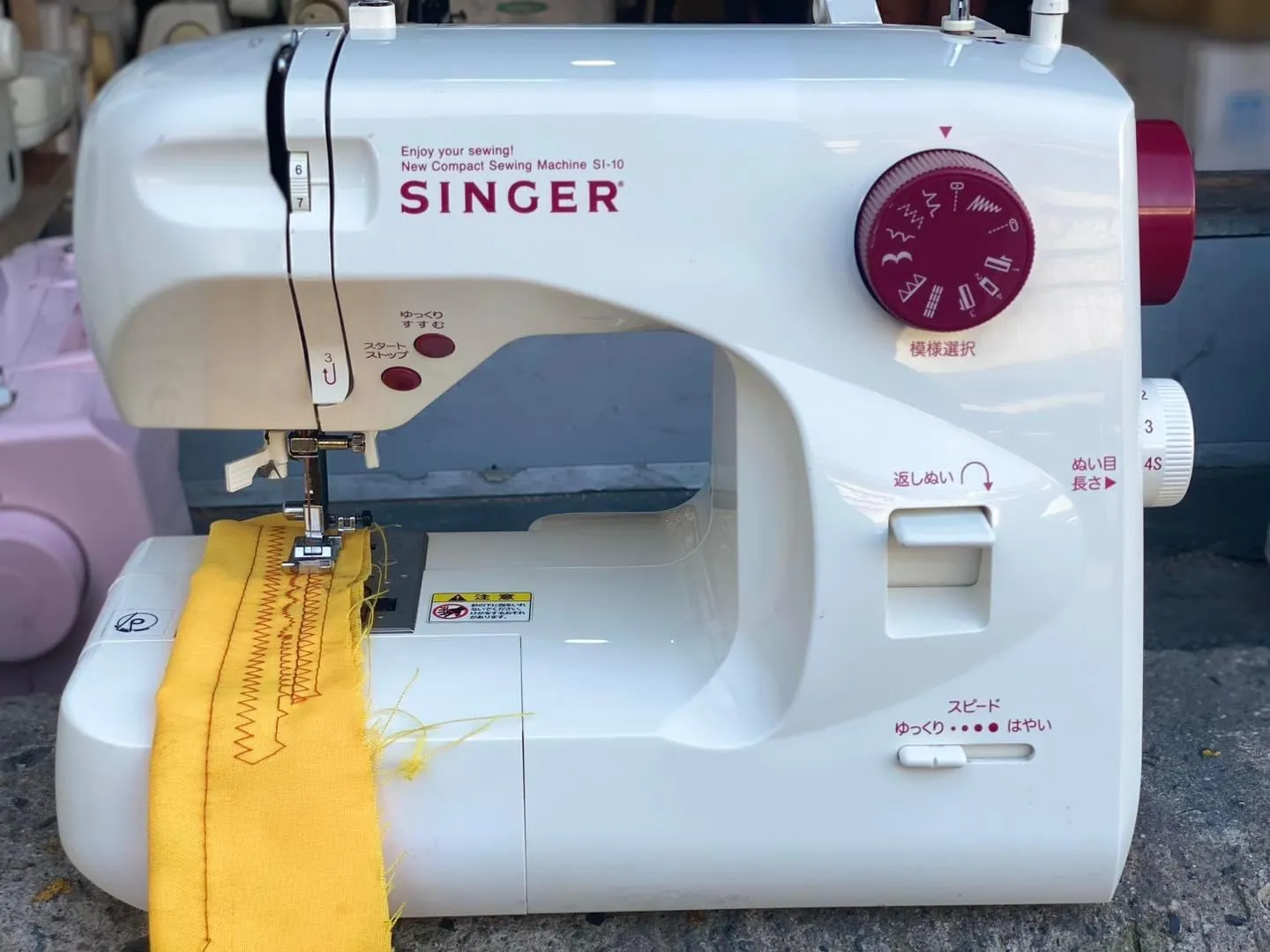
You’ll know it’s a tension problem instead of a needle issue if the needle looks straight but the thread forms loops. When the upper tension is too tight, the bobbin thread gets pulled to the top of the fabric. Too loose, and the upper thread loops underneath. Both Brother and Singer use a numbered dial, usually running from 0 to 9.
Start by setting the dial to 4, which is the factory default for most mid-weight threads. Sew a test line on two layers of scrap cotton. If the stitches look even on both sides, leave it alone. If the top thread loops underneath, turn the dial up one number and test again. If the bobbin thread shows on top, turn it down by half a number.
This adjustment assumes you’re using standard all-purpose polyester thread. Thick topstitching thread or fine embroidery thread needs different settings entirely. Forcing heavy thread through a tension disc meant for regular thread wears out the discs faster. Take five minutes to test your scraps, and you’ll save hours of unpicking bad seams later.
Motor power against heavy fabrics
A machine that stalls on thick layers isn’t necessarily broken; it’s just outmatched. Entry-level Brother models, like the basic CS series, use lighter motors designed for quilting cotton and garment sewing. Pushing six layers of denim through them makes the motor hum loudly without moving the needle. Older mechanical Singers, especially those with cast-iron bodies, have heavier motors that push through thick seams much easier.
If you hear humming but see no movement, stop pressing the pedal immediately. Pushing harder burns out the motor. Test the machine’s limit by folding your fabric into the thickest seam you plan to sew. Turn the handwheel toward you manually. If the needle won’t pierce the fabric by hand, the motor won’t do it either.
If you only sew heavy bags or upholstery once, take the project to a local tailor. If you sew thick materials weekly, you need a heavy-duty machine. Check the Singer Heavy Duty specifications to see the motor amps and frame materials listed for thicker projects. Buying a lightweight machine for heavy work means replacing it soon.
Rarer reasons a sewing machine struggles
Sometimes the problem isn’t the needle, the tension, or the motor. These less common issues affect both brands equally, though older machines show them sooner.
- Bobbin inserted backward: The thread should unwind counterclockwise on a top-loading Brother, but clockwise on many front-loading Singers; check your manual’s diagram.
- Lint packed under the needle plate: Fabric stops feeding smoothly because fuzz blocks the metal teeth; unscrew the plate and brush it out.
- Worn drive belt: The handwheel spins freely while the needle stays still, meaning the internal belt connecting them has snapped.
- Bent needle bar: The needle consistently strikes the metal throat plate instead of passing cleanly through the hole, requiring a technician’s tools to realign.
- Electronic board failure: Digital screens freeze or buttons stop responding on computerized Brother models, which is strictly a job for an authorized service center.
Replacing a drive belt or fixing a circuit board requires specific training and parts. Opening the main housing exposes you to capacitors that hold a charge even when unplugged, so leave internal repairs to a qualified technician. Your own checks should stop at cleaning, threading, and changing needles.
What fixing these problems actually takes

Most fixes here cost you time rather than money. Changing a needle or adjusting a tension dial takes under five minutes and needs no extra tools. Cleaning lint from the bobbin area requires the small screwdriver that came in your accessory kit.
Buying replacement parts like needles or bobbins costs about the same as a spool of good thread. A new drive belt or professional timing adjustment costs roughly the same as a basic beginner sewing class. The final price depends entirely on your machine’s age and model number.
Printed manuals list the exact part numbers you need. If you’ve lost yours, type your model number into the support section of the Brother or Singer website to download a free copy. Don’t guess at part sizes. Getting a quote from a local repair shop usually just means bringing the machine in for a quick look.
Frequently asked questions
Can I use Brother bobbins in a Singer?
No, they aren’t always interchangeable. Singer often uses class 15 metal or plastic bobbins, while Brother typically uses SA156 plastic bobbins. Putting the wrong style in causes immediate thread jams. Check your manual for the exact class number before buying replacements.
Why does my sewing machine skip stitches?
Skipped stitches happen when the needle is dull, bent, or the wrong type for your fabric. A ballpoint needle skips on woven cotton, and a universal needle skips on stretchy knits. Swap the needle for a fresh one matched to your material first.
How long do Brother and Singer machines last?
A well-maintained mechanical machine outlasts a computerized model, whose electronic parts typically fail sooner. That assumes regular cleaning and oiling per the manual’s schedule. Neglect cuts that lifespan down significantly.
Is it safe to sew thick leather at home?
Standard home machines aren’t built for thick leather. Trying forces the motor, bends needles, and damages the timing. Only use leather rated up to the thickness stated in your manual. For anything heavier, you need an industrial walking-foot machine.
What happens if I use cheap thread?
Cheap thread sheds excess lint that clogs the tension discs and bobbin area quickly. It also snaps under normal tension settings, leaving uneven stitches. Spend slightly more on branded all-purpose polyester thread to keep the machine running smoothly.
Does it matter which brand I pick for quilting?
Yes, it changes your workflow. Brother computerized models offer wider tables and hundreds of built-in decorative stitches useful for quilting. Singer’s mechanical models provide steady, consistent straight stitches but lack the digital memory for complex patterns.
How often should I oil my sewing machine?
Oil it after every 8 to 10 hours of actual sewing time, assuming you’re working with standard cotton. Heavier fabrics or dusty environments require more frequent oiling. Always use clear sewing machine oil, never household lubricants that gum up the gears.
Conclusion
Picking the right machine means looking at your fabric pile, not just the logo on the box. Brother handles digital features and everyday crafting smoothly. Singer brings physical weight and mechanical simplicity to heavy mending. Match the tool to the task, keep the lint brushed out, and change your needle before it goes dull.
{“@context”:”https://schema.org”,”@type”:”FAQPage”,”mainEntity”:[{“@type”:”Question”,”name”:”Can I use Brother bobbins in a Singer?”,”acceptedAnswer”:{“@type”:”Answer”,”text”:”No, they aren’t always interchangeable. Singer often uses class 15 metal or plastic bobbins, while Brother typically uses SA156 plastic bobbins. Putting the wrong style in causes immediate thread jams. Check your manual for the exact class number before buying replacements.”}},{“@type”:”Question”,”name”:”Why does my sewing machine skip stitches?”,”acceptedAnswer”:{“@type”:”Answer”,”text”:”Skipped stitches happen when the needle is dull, bent, or the wrong type for your fabric. A ballpoint needle skips on woven cotton, and a universal needle skips on stretchy knits. Swap the needle for a fresh one matched to your material first.”}},{“@type”:”Question”,”name”:”How long do Brother and Singer machines last?”,”acceptedAnswer”:{“@type”:”Answer”,”text”:”A well-maintained mechanical machine outlasts a computerized model, whose electronic parts typically fail sooner. That assumes regular cleaning and oiling per the manual’s schedule. Neglect cuts that lifespan down significantly.”}},{“@type”:”Question”,”name”:”Is it safe to sew thick leather at home?”,”acceptedAnswer”:{“@type”:”Answer”,”text”:”Standard home machines aren’t built for thick leather . Trying forces the motor, bends needles, and damages the timing. Only use leather rated up to the thickness stated in your manual. For anything heavier, you need an industrial walking-foot machine.”}},{“@type”:”Question”,”name”:”What happens if I use cheap thread?”,”acceptedAnswer”:{“@type”:”Answer”,”text”:”Cheap thread sheds excess lint that clogs the tension discs and bobbin area quickly. It also snaps under normal tension settings, leaving uneven stitches. Spend slightly more on branded all-purpose polyester thread to keep the machine running smoothly.”}},{“@type”:”Question”,”name”:”Does it matter which brand I pick for quilting?”,”acceptedAnswer”:{“@type”:”Answer”,”text”:”Yes, it changes your workflow. Brother computerized models offer wider tables and hundreds of built-in decorative stitches useful for quilting. Singer’s mechanical models provide steady, consistent straight stitches but lack the digital memory for complex patterns.”}},{“@type”:”Question”,”name”:”How often should I oil my sewing machine?”,”acceptedAnswer”:{“@type”:”Answer”,”text”:”Oil it after every 8 to 10 hours of actual sewing time, assuming you’re working with standard cotton. Heavier fabrics or dusty environments require more frequent oiling. Always use clear sewing machine oil, never household lubricants that gum up the gears.”}}]}