Best Sewing Machine for Sewing Denim: Heavy-Duty Mechanical Picks
A heavy-duty mechanical machine is what you need for denim, and the best sewing machine for sewing denim has a metal frame, a strong motor, and a high presser foot lift. Lightweight computerized models skip stitches or jam on thick seams. Check the manual’s maximum fabric thickness before you buy.
Why your sewing machine struggles with denim
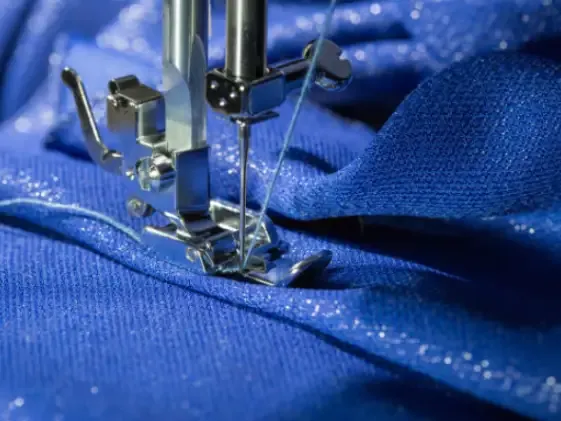
Denim breaks weak machines because it’s dense, not just thick. A standard machine’s motor stalls when the needle hits four layers of heavy fabric. The feed dogs can’t grip the material, so the fabric doesn’t move. You’ll hear a loud humming sound as the motor strains without turning.
If you’re sewing 10 to 12-ounce denim, a mid-weight machine with a metal gear train works fine. If you’re working with 14-ounce denim or heavier, you need a true heavy-duty model built for that stress. Pushing a light machine past its limit strips the plastic gears inside. That mistake costs more than buying the right machine from the start.
| Cause | How common | How to confirm it | Fix it yourself? |
|---|---|---|---|
| Machine lacks motor power | Most of the time | Motor hums but won’t turn | No |
| Wrong needle type or size | Very often | Skipped stitches or broken needles | Yes |
| Incorrect thread tension | Often | Loops form on the bottom side | Yes |
| Presser foot pressure too low | Sometimes | Fabric slides instead of feeding | Yes |
| Plastic internal gears | Less often | Grinding noise under heavy load | No |
| Feed dogs worn down | Rarely | Fabric barely moves forward | Yes with care |
| Timing belt slipped | Rarely | Needle hits the bobbin case | No |
Not enough motor power for thick seams
A weak motor stops completely when the needle meets a thick denim seam. It doesn’t have the torque to push through multiple layers of heavy cotton twill.
The only real fix is using a machine built for heavy fabrics. Singer lists the heavy-duty specifications for their frames directly on their product pages. You’ll spend about twice what a basic starter machine costs.
Replacing a burned-out motor takes a few hours and requires matching the exact voltage and mounting points. Never open the housing to check electrical parts yourself, since capacitors hold dangerous charges even when unplugged. Leave internal electrical work to a qualified repair technician.
Using the wrong needle size
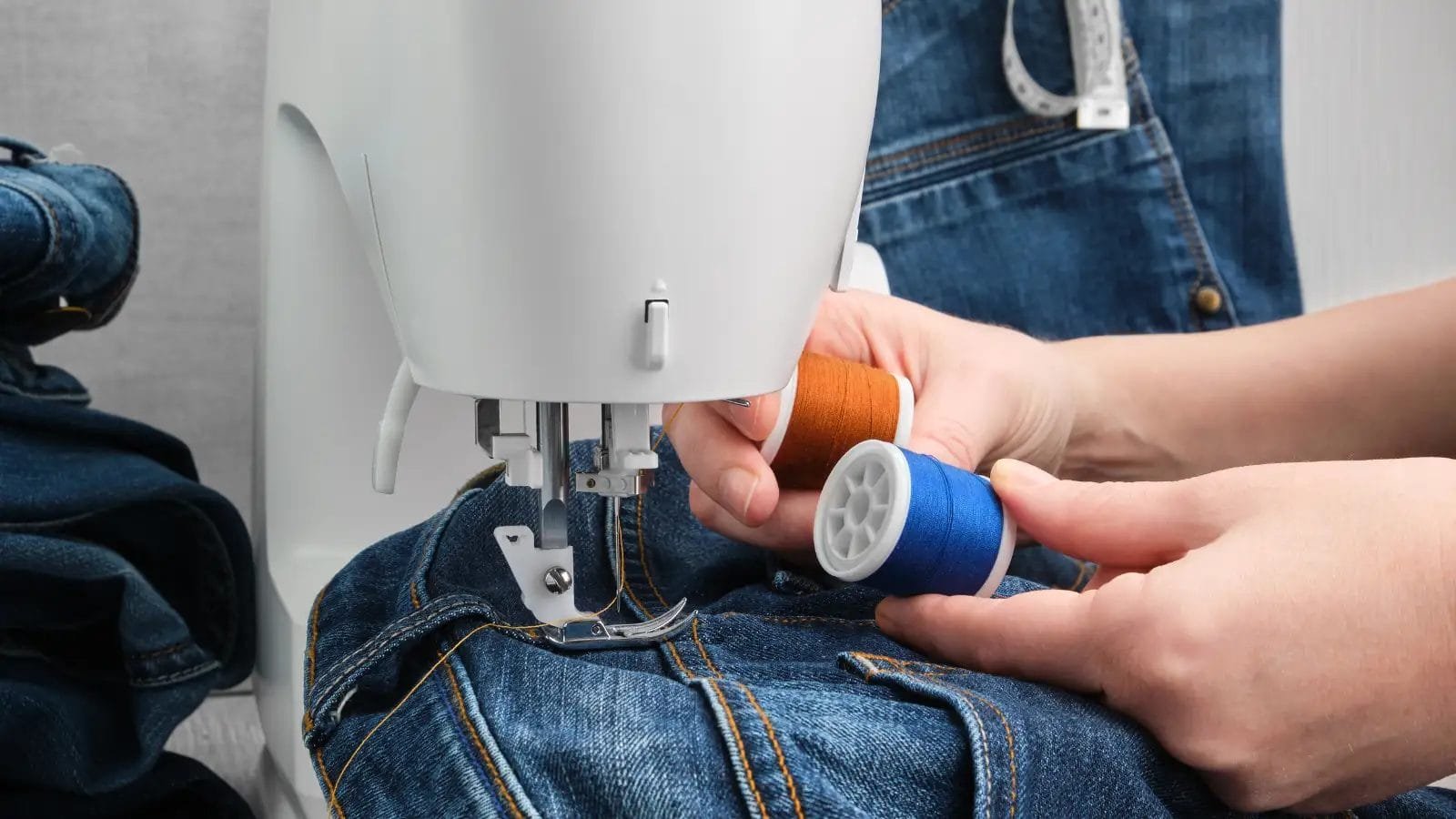
A universal needle is more likely to skip stitches or deflect on heavy denim because its slightly rounded point doesn’t pierce the tight cotton weave as cleanly as a sharp denim needle. Denim needles have a sharp point and a reinforced shaft designed specifically for thick fabrics.
Check your needle package before you start sewing. For medium-weight denim around 10 to 12 ounces, use a size 90/14 denim needle. For anything heavier than 14 ounces, step up to a size 100/16. These sizes assume standard woven denim; stretch denim needs a slightly smaller needle to avoid leaving large holes.
Change the needle after every major project or about eight hours of actual sewing time. A dull needle forces the motor to work harder on every single stitch. Swap it out by loosening the needle clamp screw, pulling the old one straight down, and inserting the new one flat side back. Tighten the screw firmly.
Thread tension set too tight
Tight upper tension pulls the bobbin thread straight through the denim to the top side. Heavy threads need more room to pass between the tension discs smoothly. If your stitches look puckered or the lower thread shows on top, your tension is off.
This looks different from a motor problem because the machine still runs. Reset your upper tension dial to the middle setting, usually around 4 or 5. Sew a test line on two layers of scrap denim first.
If the bottom thread still loops, increase the top tension by half a number. Test again. Don’t jump three numbers at once, since that snaps heavy thread. Use bonded nylon or heavy polyester thread meant for upholstery, not regular cotton spools.
Match your bobbin thread weight to your top thread. A mismatch creates uneven knots inside the seam.
Low presser foot pressure
The presser foot must push the denim firmly against the feed dogs to move it forward. When the pressure is too light, the fabric slips while the needle goes up and down in the same spot. You end up with a tangled knot of thread instead of a seam.
Find the pressure adjustment screw or dial on top of your machine’s head. Turn it clockwise to increase the downward force. Test the movement by pulling the fabric gently while the foot is down. It shouldn’t slide easily without the pedal pressed.
This issue mimics dull feed dogs, but adjusting the pressure takes seconds. If you crank the pressure up fully and the fabric still won’t move, the feed dogs might actually be worn flat. That’s a separate mechanical problem requiring new parts.
Other reasons your machine fails on denim
A few less common issues cause trouble when sewing heavy fabrics.
- Worn feed dogs: The teeth are smooth instead of sharp, and the fabric won’t advance no matter how hard you press the pedal.
- Slipped timing belt: The needle strikes the metal bobbin case with a loud click, meaning the internal synchronization is broken.
- Wrong throat plate hole: A straight-stitch plate has a tiny hole that deflects thick needles, causing them to bend or break immediately.
- Dust packed in the bobbin area: Lint from heavy denim builds up fast and jams the rotating hook mechanism entirely.
You can clean lint and swap a throat plate safely yourself. But if the timing belt has slipped or the needle hits the bobbin case, stop sewing immediately. Adjusting the timing requires specialized tools and training. Take it to a certified sewing machine mechanic before you break the hook assembly.
What fixing these denim problems demands
Fixing a needle or tension issue takes five minutes and costs almost nothing.
Upgrading to a stronger machine is a bigger commitment. You don’t need industrial equipment unless you’re sewing denim commercially every single day.
For internal repairs like a slipped timing belt or stripped gears, you’ll need a professional technician. Always ask for a written estimate before letting them open the casing. Your machine’s official manual tells you which parts are user-serviceable and which require a shop visit.
Frequently asked questions
Can a regular sewing machine handle denim?
Yes, but only lightweight denim under 10 ounces. Standard machines struggle with thicker layers because their motors lack the necessary torque. Use a denim needle and go very slowly over thick seams. If the motor hums without moving, stop immediately to prevent damage.
Why does my needle keep breaking on jeans?
You’re likely using a universal needle instead of a denim-specific one. Universal needles have rounded tips that deflect off tight denim weaves. Switch to a size 90/14 or 100/16 denim needle. Make sure you aren’t pulling the fabric forcefully while the needle is down.
How long does a heavy-duty machine last sewing denim?
A well-maintained mechanical heavy-duty machine lasts 15 to 25 years with weekly use. That range assumes you oil it according to the manufacturer’s schedule and change needles frequently. Computerized models may fail sooner due to electronic board issues. Check your specific warranty terms for exact coverage periods.
Is it safe to sew over thick denim seams?
It’s safe if your machine has the power, but forcing it breaks needles. Fold the seam flat or use a hump jumper tool to level the presser foot. Turn the handwheel manually over the thickest part. Let the machine do the work instead of pushing the fabric hard.
What happens if I use regular thread on denim?
Regular cotton thread snaps under the stress of heavy denim seams. It lacks the tensile strength needed for thick fabric layers. Switch to heavy polyester or upholstery thread for both the top and bobbin. Your seams will hold up to washing and daily wear much better.
Does it matter what stitch length I use?
Yes, a longer stitch prevents the dense fabric from perforating and tearing. Set your stitch length to 3.0 or 3.5 millimeters for medium to heavy denim. Short stitches place too many holes close together, weakening the cotton fibers. Test your chosen length on a scrap piece first.
How many layers of denim can a home machine sew?
Most heavy-duty home machines handle four to six layers of 12-ounce denim safely. That number drops to two or three layers if you’re using 14-ounce fabric. Your machine’s manual states its maximum thickness capacity under the presser foot. Exceeding that limit strips the internal gears permanently.
Conclusion
Choosing the right setup makes sewing denim straightforward rather than frustrating. Match your needle size to the fabric weight, use strong thread, and let a capable motor pull the layers through. Don’t force a lightweight machine to do heavy work. Give your equipment the right settings, and your denim projects will come together cleanly every time.
{“@context”:”https://schema.org”,”@type”:”FAQPage”,”mainEntity”:[{“@type”:”Question”,”name”:”Can a regular sewing machine handle denim?”,”acceptedAnswer”:{“@type”:”Answer”,”text”:”Yes, but only lightweight denim under 10 ounces. Standard machines struggle with thicker layers because their motors lack the necessary torque. Use a denim needle and go very slowly over thick seams. If the motor hums without moving, stop immediately to prevent damage.”}},{“@type”:”Question”,”name”:”Why does my needle keep breaking on jeans?”,”acceptedAnswer”:{“@type”:”Answer”,”text”:”You’re likely using a universal needle instead of a denim-specific one. Universal needles have rounded tips that deflect off tight denim weaves. Switch to a size 90/14 or 100/16 denim needle. Make sure you aren’t pulling the fabric forcefully while the needle is down.”}},{“@type”:”Question”,”name”:”How long does a heavy-duty machine last sewing denim?”,”acceptedAnswer”:{“@type”:”Answer”,”text”:”A well-maintained mechanical heavy-duty machine lasts 15 to 25 years with weekly use. That range assumes you oil it according to the manufacturer’s schedule and change needles frequently. Computerized models may fail sooner due to electronic board issues. Check your specific warranty terms for exact coverage periods.”}},{“@type”:”Question”,”name”:”Is it safe to sew over thick denim seams?”,”acceptedAnswer”:{“@type”:”Answer”,”text”:”It’s safe if your machine has the power, but forcing it breaks needles. Fold the seam flat or use a hump jumper tool to level the presser foot. Turn the handwheel manually over the thickest part. Let the machine do the work instead of pushing the fabric hard.”}},{“@type”:”Question”,”name”:”What happens if I use regular thread on denim?”,”acceptedAnswer”:{“@type”:”Answer”,”text”:”Regular cotton thread snaps under the stress of heavy denim seams. It lacks the tensile strength needed for thick fabric layers. Switch to heavy polyester or upholstery thread for both the top and bobbin. Your seams will hold up to washing and daily wear much better.”}},{“@type”:”Question”,”name”:”Does it matter what stitch length I use?”,”acceptedAnswer”:{“@type”:”Answer”,”text”:”Yes, a longer stitch prevents the dense fabric from perforating and tearing. Set your stitch length to 3.0 or 3.5 millimeters for medium to heavy denim. Short stitches place too many holes close together, weakening the cotton fibers. Test your chosen length on a scrap piece first.”}},{“@type”:”Question”,”name”:”How many layers of denim can a home machine sew?”,”acceptedAnswer”:{“@type”:”Answer”,”text”:”Most heavy-duty home machines handle four to six layers of 12-ounce denim safely. That number drops to two or three layers if you’re using 14-ounce fabric. Your machine’s manual states its maximum thickness capacity under the presser foot. Exceeding that limit strips the internal gears permanently.”}}]}