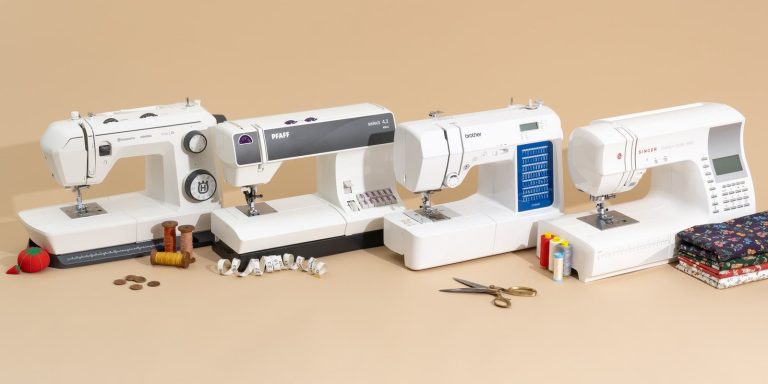
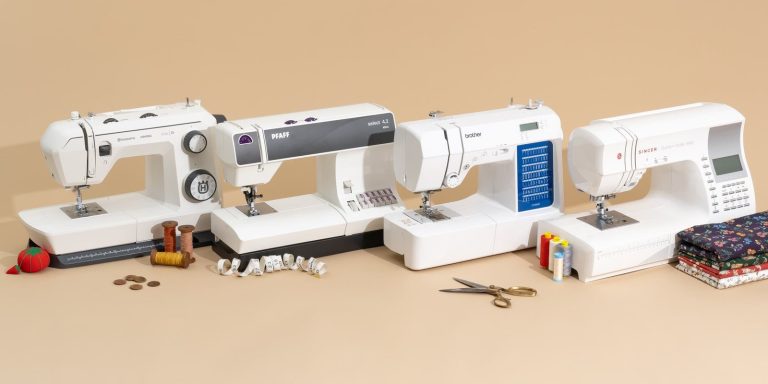
What are the differences between different types of sewing machines?
The differences between the different types of sewing machines come down to what you sew, not what you spend. For most people, a computerized machine is the best choice because it handles straight seams, buttonholes, and zigzag work without extra attachments. A mechanical machine wins if you only mend jeans and hem curtains, since there’s less to break and nothing to relearn.
How the different types differ
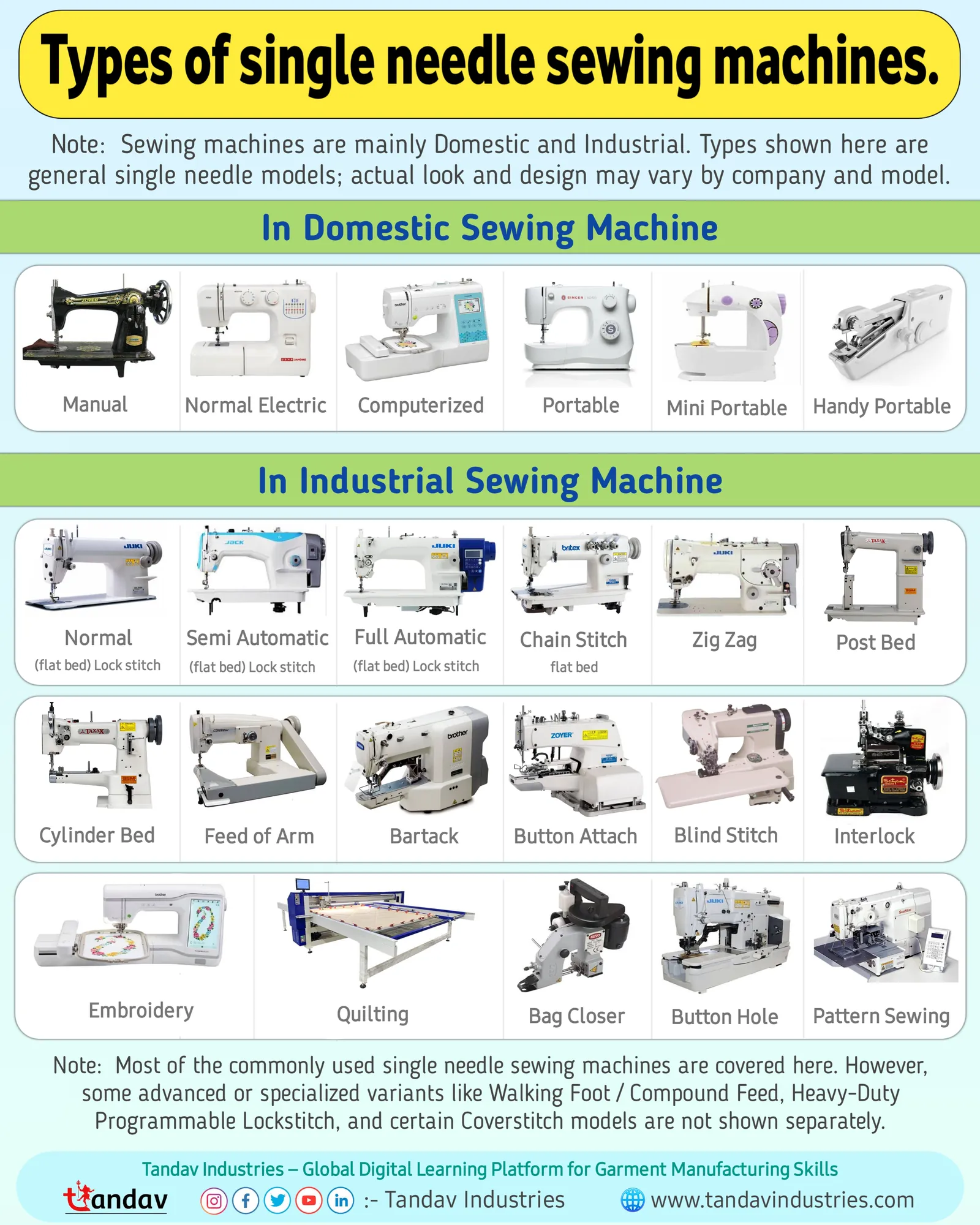
Sewing machines differ mainly in how they move the needle and feed the fabric. Mechanical models use dials and cams, electronic ones use a motor and buttons, computerized ones use a small computer chip, and sergers trim and overcast at the same time. Here’s how the main types stack up.
| Method | How long | Effort | Cost | Best for |
|---|---|---|---|---|
| Mechanical | Setup in minutes | Low | Low | Mending, straight seams |
| Electronic | Setup in minutes | Low | Medium | Hobby sewing, buttonholes |
| Computerized | Setup in minutes | Medium | High | Quilting, decorative stitches |
| Serger (overlock) | Setup in minutes | High | High | Stretchy fabric, clean edges |
No single row wins everything. A mechanical machine is cheap and tough but limited. A computerized one does far more but costs more and needs care. Check current prices at a dealer, since they change often.
How a mechanical sewing machine works
A mechanical machine is the simplest type. You pick a stitch with a dial, and the machine does the rest. There’s no screen and no circuit board, so there’s less to go wrong.
- Raise the presser foot and thread the machine from spool to needle, following the arrows printed on the body.
- Set the stitch length dial to about 2.5 mm for general seams.
- Set the stitch width dial to 0 for a straight stitch.
- Lower the presser foot and press the pedal to start.
- Guide the fabric with both hands — don’t pull it, the feed dogs move it.
These machines are tough, cheap to repair, and easy to learn on. Their weakness is range: you get straight and zigzag stitches, and anything fancier needs a special attachment. If you only mend clothes and sew curtains, that’s plenty.
What an electronic sewing machine adds
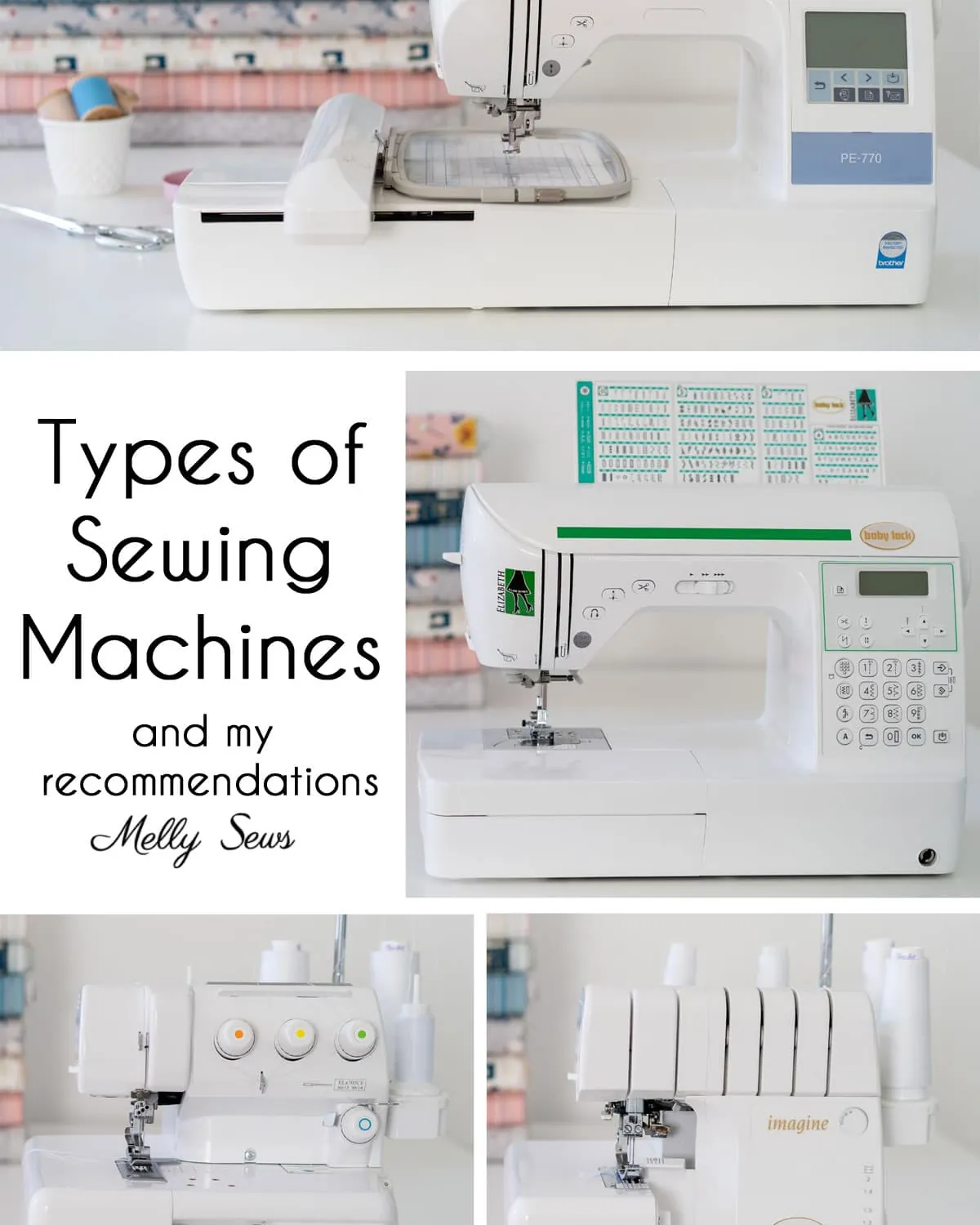
An electronic machine replaces the dials with buttons and a small motor. You still guide the fabric, but the machine controls speed and needle position more precisely.
- Press the power button and wait for the needle to center itself.
- Choose your stitch with the button panel.
- Set the speed slider to slow for the first few inches, then faster once you’re comfortable.
- Use the needle up/down button to stop with the needle in the fabric when you turn a corner.
- Press the reverse button for 3 to 4 stitches at each end to lock the seam.
The big gain is the one-step buttonhole, which sews a neat buttonhole in one press. The weakness is the electronics. A power surge or a spilled drink can cost more to fix than the machine’s worth.
Computerized machines and sergers
A computerized machine has a small computer inside. It stores dozens of stitches and can sew a pattern without you guiding every stitch. A serger is a different tool — it trims the edge and wraps it in thread at the same time.
- Select the stitch number from the screen menu.
- Set the recommended presser foot for that stitch — the screen tells you which one.
- Adjust the stitch length and width on screen, usually 2.5 mm and 5 mm as a starting point.
- Lower the presser foot and press start; the machine sews the pattern at a steady speed.
- For a serger, thread all four cones in the correct order or it won’t form a stitch.
Computerized machines shine at quilting and decorative work. Their weakness is dependence on the board — when it fails, the machine usually needs a dealer, not a home repair.
Picking the right machine for your work
The right choice depends on what you actually sew. Three situations cover most people, and each points to a different machine.
When you’re in a hurry: a mechanical machine wins. There’s no menu to scroll and no boot-up time. You thread it and sew in under two minutes.
When it’s your first machine: an electronic model wins. The speed slider and needle up/down button make it forgiving while you learn to control the fabric.
When you want the best possible result: a computerized machine wins for quilting and decorative work, and a serger wins for stretchy knits. That’s two machines, not one.
The trade-off is the same one from the start: simple machines are cheap and tough but limited, and complex machines do more but cost more to buy and to fix.
Rules that apply to any sewing machine

Some things matter no matter which machine you pick. The needle and thread have to match the fabric, and the tension has to be right, or every seam will pucker or loop.
- Match needle to fabric. A universal 80/12 needle suits woven cotton. Use a ballpoint needle on knits and a denim needle on heavy twill.
- Match thread to needle. All-purpose polyester thread works for most jobs. Heavy thread needs a bigger needle, or it will shred.
- Check tension partway. Sew a test seam on scrap fabric first. If the top thread loops underneath, lower the top tension one step at a time.
- Clean and oil. Brush out lint after every few hours of sewing. Check your manual for the oil points — some computerized models don’t need oil at all.
If a machine needs a repair you can’t do with a screwdriver and the manual, take it to an authorized dealer. Opening the casing yourself can void the warranty. The US Consumer Product Safety Commission publishes recalls if you ever need to check a specific model.
Frequently asked questions
Can a mechanical sewing machine do a buttonhole?
Yes, but usually with a special buttonhole foot or a 4-step manual process. You sew each side of the buttonhole in a set order, turning the fabric between steps. It takes longer than a one-step buttonhole, and the results vary more. A computerized machine does it in one press.
Why is my sewing machine skipping stitches?
The most common cause is a bent or blunt needle, or a needle that’s wrong for the fabric. Change the needle first — it’s the cheapest fix. If that doesn’t help, check that the needle is pushed all the way up and the thread is seated in the tension discs.
How long does a sewing machine last?
It depends on use and care, not on price alone. A mechanical machine used a few hours a week can run for many years with regular cleaning. A computerized model may need a circuit board replacement at some point, and that cost varies by brand. Check your manual or the maker’s site for service intervals.
Is it safe to use a serger around children?
No, not without close supervision. A serger has a moving blade that trims fabric as it sews, and the blade stays exposed near the needle. Keep fingers well back from the cutting area, unplug the machine when you thread it, and keep young children away while it runs.
What happens if I use the wrong needle?
You’ll get skipped stitches, snagged fabric, or a broken needle. A ballpoint needle on woven cotton can push the weave apart instead of through it. A sharp needle on knit fabric can cut the loops and make a hole. Match the needle to the fabric before you start sewing.
How often should I change the needle?
Change it after about 8 to 10 hours of sewing, or sooner if it hits a pin or the plate. A dull needle makes a punching sound instead of a soft tap. Keep a spare pack of needles in the sizes you use most, so you’re not tempted to push a worn one further.
Do I need a serger if I already have a sewing machine?
No, not for most home sewing. A regular machine with a zigzag stitch can finish edges well enough for everyday clothes and repairs. A serger earns its place if you sew a lot of knits.
Conclusion
Take your usual project to a dealer and test two or three models side by side. You’ll feel which one suits your hands, and that’s worth more than any spec sheet. Pick the machine you’d actually sit down at tomorrow.
{“@context”:”https://schema.org”,”@type”:”FAQPage”,”mainEntity”:[{“@type”:”Question”,”name”:”Can a mechanical sewing machine do a buttonhole?”,”acceptedAnswer”:{“@type”:”Answer”,”text”:”Yes, but usually with a special buttonhole foot or a 4-step manual process. You sew each side of the buttonhole in a set order, turning the fabric between steps. It takes longer than a one-step buttonhole, and the results vary more. A computerized machine does it in one press.”}},{“@type”:”Question”,”name”:”Why is my sewing machine skipping stitches?”,”acceptedAnswer”:{“@type”:”Answer”,”text”:”The most common cause is a bent or blunt needle, or a needle that’s wrong for the fabric. Change the needle first — it’s the cheapest fix. If that doesn’t help, check that the needle is pushed all the way up and the thread is seated in the tension discs.”}},{“@type”:”Question”,”name”:”How long does a sewing machine last?”,”acceptedAnswer”:{“@type”:”Answer”,”text”:”It depends on use and care, not on price alone. A mechanical machine used a few hours a week can run for many years with regular cleaning. A computerized model may need a circuit board replacement at some point, and that cost varies by brand. Check your manual or the maker’s site for service intervals.”}},{“@type”:”Question”,”name”:”Is it safe to use a serger around children?”,”acceptedAnswer”:{“@type”:”Answer”,”text”:”No, not without close supervision. A serger has a moving blade that trims fabric as it sews, and the blade stays exposed near the needle. Keep fingers well back from the cutting area, unplug the machine when you thread it, and keep young children away while it runs.”}},{“@type”:”Question”,”name”:”What happens if I use the wrong needle?”,”acceptedAnswer”:{“@type”:”Answer”,”text”:”You’ll get skipped stitches, snagged fabric, or a broken needle. A ballpoint needle on woven cotton can push the weave apart instead of through it. A sharp needle on knit fabric can cut the loops and make a hole. Match the needle to the fabric before you start sewing.”}},{“@type”:”Question”,”name”:”How often should I change the needle?”,”acceptedAnswer”:{“@type”:”Answer”,”text”:”Change it after about 8 to 10 hours of sewing, or sooner if it hits a pin or the plate. A dull needle makes a punching sound instead of a soft tap. Keep a spare pack of needles in the sizes you use most, so you’re not tempted to push a worn one further.”}},{“@type”:”Question”,”name”:”Do I need a serger if I already have a sewing machine?”,”acceptedAnswer”:{“@type”:”Answer”,”text”:”No, not for most home sewing. A regular machine with a zigzag stitch can finish edges well enough for everyday clothes and repairs. A serger earns its place if you sew a lot of knits.”}}]}