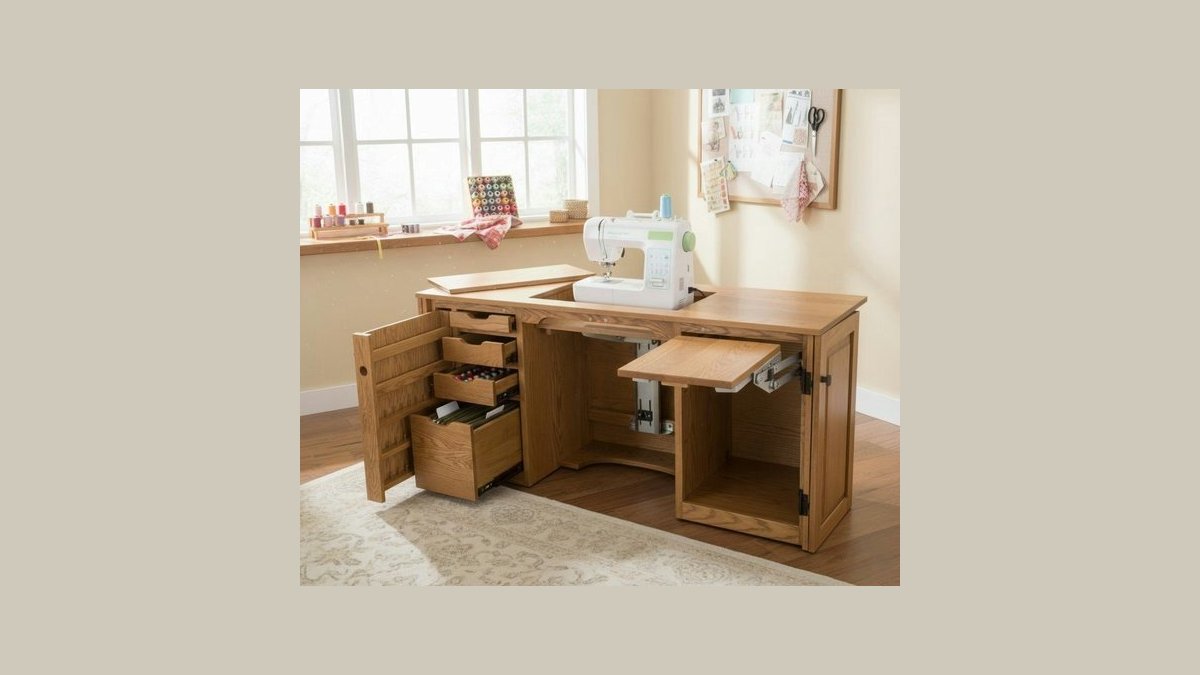
What Size Sewing Machine Table Do You Need? Standard Dimensions
A standard sewing table is 40 to 60 inches wide, 20 to 30 inches deep, and 28 to 30 inches high. The exact size you need depends on your machine’s footprint and the fabric you handle most. To determine the right size, measure your machine’s base, add at least 12 inches of free space on each side for fabric support, and match the height to your seated elbow.
The one thing that decides whether a table works or fails is clearance around the needle. A machine squeezed into a tight space pulls fabric sideways, causing skipped stitches and uneven seams. You need room for the material to feed flat without dragging off the edge.
Leaving out the extra space for fabric handling is where things go wrong. A table that fits the machine perfectly but has no room for a quilt or long curtain panel forces you to fight the weight of the cloth. That tension ruins straight lines and wears out your shoulders fast.
Measuring for your sewing table
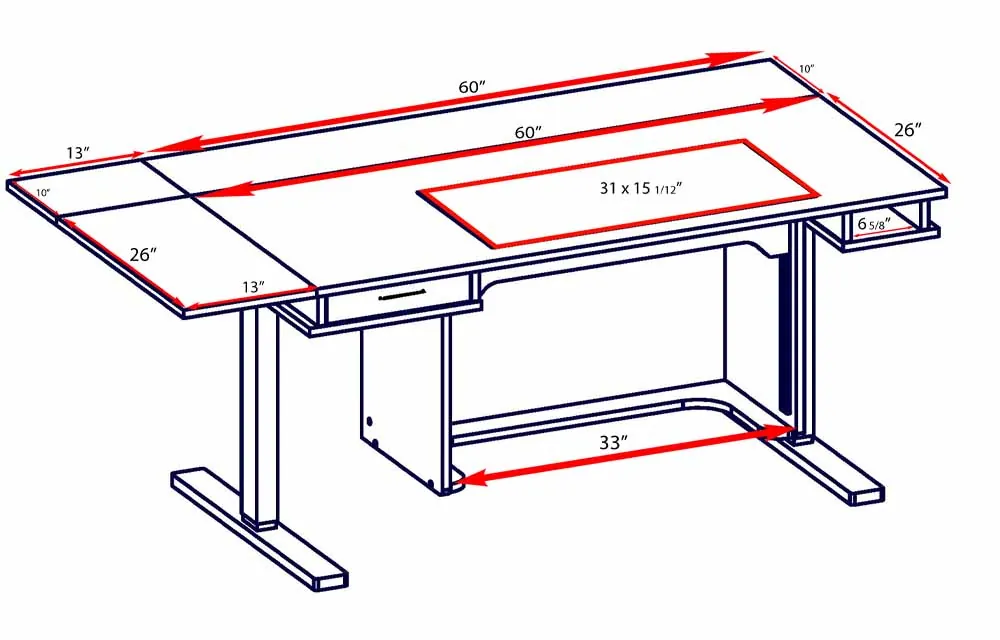
Getting the right fit starts with numbers, not guesswork. You’ll need a tape measure, your sewing machine, and the chair you actually sew in. Don’t skip the chair part — a table that feels fine standing up will wreck your posture once you sit down.
- Measure your machine’s base from left to right, then front to back. Write both numbers down in inches. This is your absolute minimum footprint, assuming you only sew small items like napkins or pillowcases.
- Add 12 to 18 inches to each side of that width for fabric support. If you sew garments or quilts, use the 18-inch addition; if you only do small repairs or craft projects, 12 inches is enough.
- Add 8 to 10 inches behind the machine’s depth measurement. Fabric bunches up when it doesn’t have a place to rest, so this back space keeps the material feeding smoothly through the presser foot.
- Sit in your sewing chair and let your arms hang loose. Bend your elbows to a 90-degree angle and measure from the floor to the bottom of your forearm. Your table surface should land within one inch of that number, which usually falls between 28 and 30 inches for adults.
- Check the weight rating printed on the table’s packaging or product page. Domestic machines weigh 10 to 20 pounds, but industrial models can top 50 pounds. A table built for a lightweight hobby machine will wobble dangerously under a heavy-duty model.
Tip: If your machine sits inside a recessed cutout rather than on top, measure the insert opening, not the outer frame. The cutout must be half an inch wider than the machine bed on all sides so you can lift it out for cleaning.
If you plan to use a serger alongside your main machine, you’ll need a second table or a much wider single one. Trying to run two active machines on a 40-inch desk means neither gets the fabric support it requires.
How long measuring for a sewing table takes
Setting up the right workspace isn’t a quick glance — it takes actual measuring. Rushing this step means you end up with a desk that fights your fabric instead of supporting it. The time you spend here saves hours of frustration later.
| Situation | How long | What changes it | What to watch for |
|---|---|---|---|
| Basic home machine on a flat desk | 10 to 15 minutes | Machine footprint size | Wobble when pressing the pedal hard |
| Quilting setup needing wide support | 20 to 30 minutes | Extension table attachment | Fabric dragging off the back edge |
| Industrial machine on a dedicated stand | 30 to 45 minutes | Motor mount and belt alignment | Vibration shaking the whole table |
| Adjustable sit-stand sewing desk | 15 to 25 minutes | Height mechanism type | Pinch points near the lifting motor |
| Adding a secondary serger station | 20 to 30 minutes | Distance between the two machines | Cords crossing your foot pedal area |
If your measuring takes longer than these ranges suggest, stop and check your machine’s manual for specific clearance requirements. Some older models have unusual shapes that make standard tape-measure math unreliable, and forcing a fit damages the machine bed.
Signs your sewing table size is right
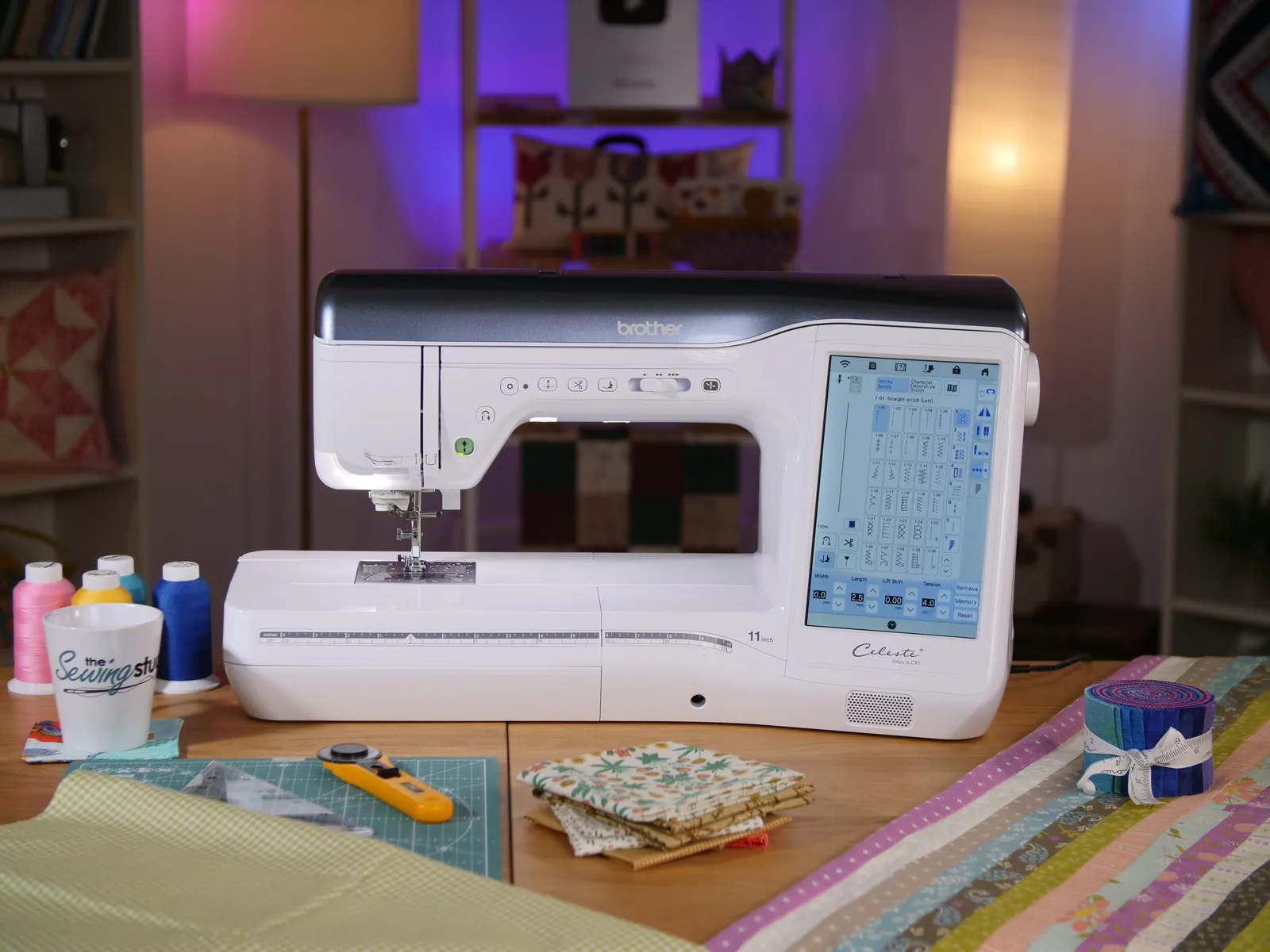
You’ll know the dimensions work when your fabric moves freely without your hands fighting to keep it straight. The material should glide across the surface and drop gently off the back or sides, never pulling taut against the needle. If you constantly push or drag the cloth to keep it aligned, the table is too small.
Listen to the machine while you sew a test seam. A properly supported setup runs quietly because the motor isn’t straining against fabric tension. Rattling or a high-pitched whine often means the cloth is hanging off an unsupported edge, dragging the feed dogs backward.
Check your shoulders after twenty minutes of continuous sewing. They should stay relaxed and level. If they creep up toward your ears or you lean forward to reach the needle, the height is wrong even if the width is perfect.
When visual signs disagree with how the machine sounds, trust the stitch quality.
Table mistakes that ruin your sewing
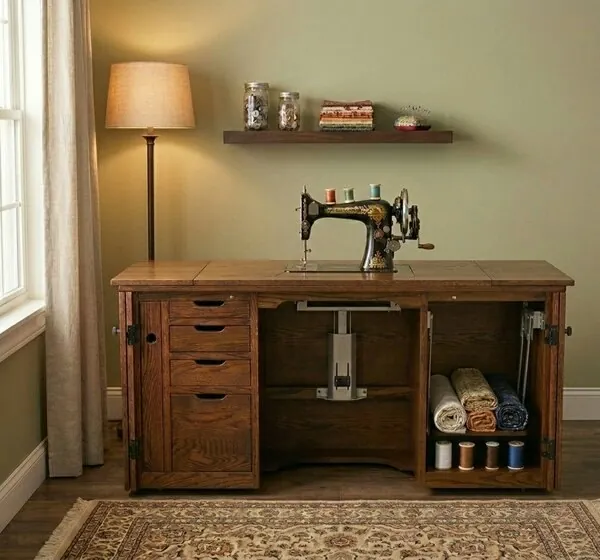
- Choosing a table that exactly matches the machine’s footprint. This leaves zero room for fabric to rest, causing the material’s weight to drag on the needle and snap threads. Pick a surface at least 24 inches wider than the machine bed so the cloth stays fully supported.
- Ignoring the height relative to your chair. A desk that’s too high forces your wrists upward, leading to pain and crooked stitching over time. Match the tabletop to your bent elbow height while sitting in the exact chair you’ll use daily.
- Using a folding card table for heavy machines. Thin metal legs flex under vibration, making the needle bounce and creating uneven stitch lengths. Use a solid wood or steel-frame desk rated for at least double your machine’s actual weight.
- Placing the table flush against a wall. Fabric needs to fall behind the machine, and a wall blocks that path completely. Leave at least 12 inches of open space behind the desk so long pieces of cloth can drape freely.
- Forgetting cord and pedal clearance. Routing power cables under your feet creates a tripping hazard and yanks the plug during a project. Run cords along the back leg using adhesive clips and leave the pedal area completely clear.
Frequently asked questions
Can I use a regular desk as a sewing table?
Yes, you can use a standard office desk if it meets the size requirements. It needs to be at least 40 inches wide and hold your machine’s weight without wobbling. Make sure the height sits between 28 and 30 inches so your elbows bend comfortably. Avoid glass tops, as they can crack under the machine’s weight and vibration.
Why does my fabric pull to the side when I sew?
Fabric pulls sideways when the table is too narrow to support its full weight. The hanging material drags against the feed dogs, steering the cloth away from a straight line. You need at least 12 inches of flat surface on the left side of the needle to prevent this drag.
How much weight should a sewing table hold?
A table for a standard home machine should safely support 50 to 75 pounds. Industrial machines require tables rated for 100 pounds or more. Always check the manufacturer’s published weight limit before setting up, because a sagging surface throws off the needle alignment and breaks parts.
Is it safe to put a sewing machine on a folding table?
No, it isn’t safe for anything beyond very light, short mending jobs. Folding tables lack the rigid cross-bracing needed to absorb motor vibration. The shaking causes skipped stitches and can eventually loosen the machine’s internal screws. Use a solid, stationary desk for any serious sewing.
What happens if my sewing table is too high?
If the table is too high, you’ll raise your shoulders to reach the fabric. This causes neck and upper back pain after about thirty minutes of sewing. It also reduces your control over the material, leading to crooked seams. Lower the table or switch to a taller chair to fix this.
How far should the table be from the wall?
Keep the back edge of your sewing table at least 12 inches away from the wall. This gap lets fabric slide off the back without bunching up against the baseboard. If you sew large items like curtains, increase that distance to 24 inches so the excess material has room to drape.
Conclusion
Picking the right surface comes down to three simple measurements: your machine’s base, your seated elbow height, and the widest fabric you plan to sew. Get those numbers right, and the machine does the work instead of your shoulders. Don’t settle for a desk that barely fits the hardware — the extra inches of flat space are what actually keep your stitches straight.
{“@context”:”https://schema.org”,”@type”:”FAQPage”,”mainEntity”:[{“@type”:”Question”,”name”:”Can I use a regular desk as a sewing table?”,”acceptedAnswer”:{“@type”:”Answer”,”text”:”Yes, you can use a standard office desk if it meets the size requirements. It needs to be at least 40 inches wide and hold your machine’s weight without wobbling. Make sure the height sits between 28 and 30 inches so your elbows bend comfortably. Avoid glass tops, as they can crack under the machine’s weight and vibration.”}},{“@type”:”Question”,”name”:”Why does my fabric pull to the side when I sew?”,”acceptedAnswer”:{“@type”:”Answer”,”text”:”Fabric pulls sideways when the table is too narrow to support its full weight. The hanging material drags against the feed dogs, steering the cloth away from a straight line. You need at least 12 inches of flat surface on the left side of the needle to prevent this drag.”}},{“@type”:”Question”,”name”:”How much weight should a sewing table hold?”,”acceptedAnswer”:{“@type”:”Answer”,”text”:”A table for a standard home machine should safely support 50 to 75 pounds. Industrial machines require tables rated for 100 pounds or more. Always check the manufacturer’s published weight limit before setting up, because a sagging surface throws off the needle alignment and breaks parts.”}},{“@type”:”Question”,”name”:”Is it safe to put a sewing machine on a folding table?”,”acceptedAnswer”:{“@type”:”Answer”,”text”:”No, it isn’t safe for anything beyond very light, short mending jobs. Folding tables lack the rigid cross-bracing needed to absorb motor vibration. The shaking causes skipped stitches and can eventually loosen the machine’s internal screws. Use a solid, stationary desk for any serious sewing.”}},{“@type”:”Question”,”name”:”What happens if my sewing table is too high?”,”acceptedAnswer”:{“@type”:”Answer”,”text”:”If the table is too high, you’ll raise your shoulders to reach the fabric. This causes neck and upper back pain after about thirty minutes of sewing. It also reduces your control over the material, leading to crooked seams. Lower the table or switch to a taller chair to fix this.”}},{“@type”:”Question”,”name”:”How far should the table be from the wall?”,”acceptedAnswer”:{“@type”:”Answer”,”text”:”Keep the back edge of your sewing table at least 12 inches away from the wall. This gap lets fabric slide off the back without bunching up against the baseboard. If you sew large items like curtains, increase that distance to 24 inches so the excess material has room to drape.”}}]}