Brother vs Singer: Which Sewing Machine Is Better for You?
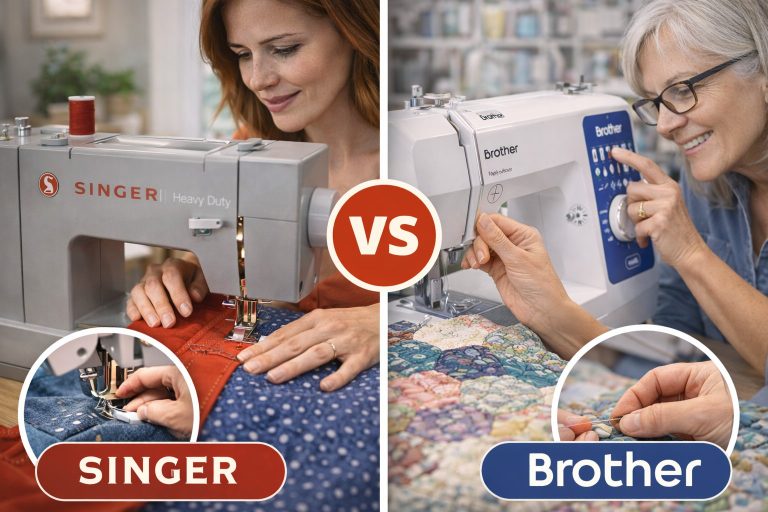
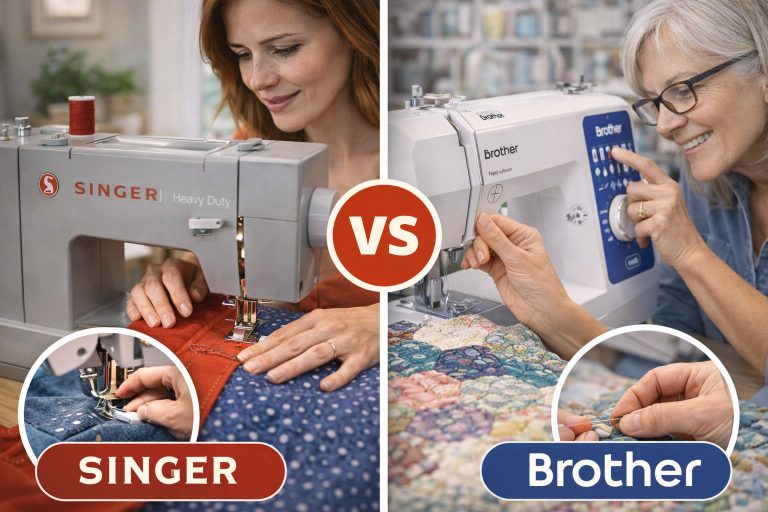
For most home sewists, Brother is the better buy: its computerized machines are easier to learn on, quieter, and usually cheaper than the Singer equivalent. Singer wins when you sew heavy fabric regularly — its heavy-duty metal-frame machines handle denim and canvas that stall most beginner Brother models.
Brother vs Singer at a glance
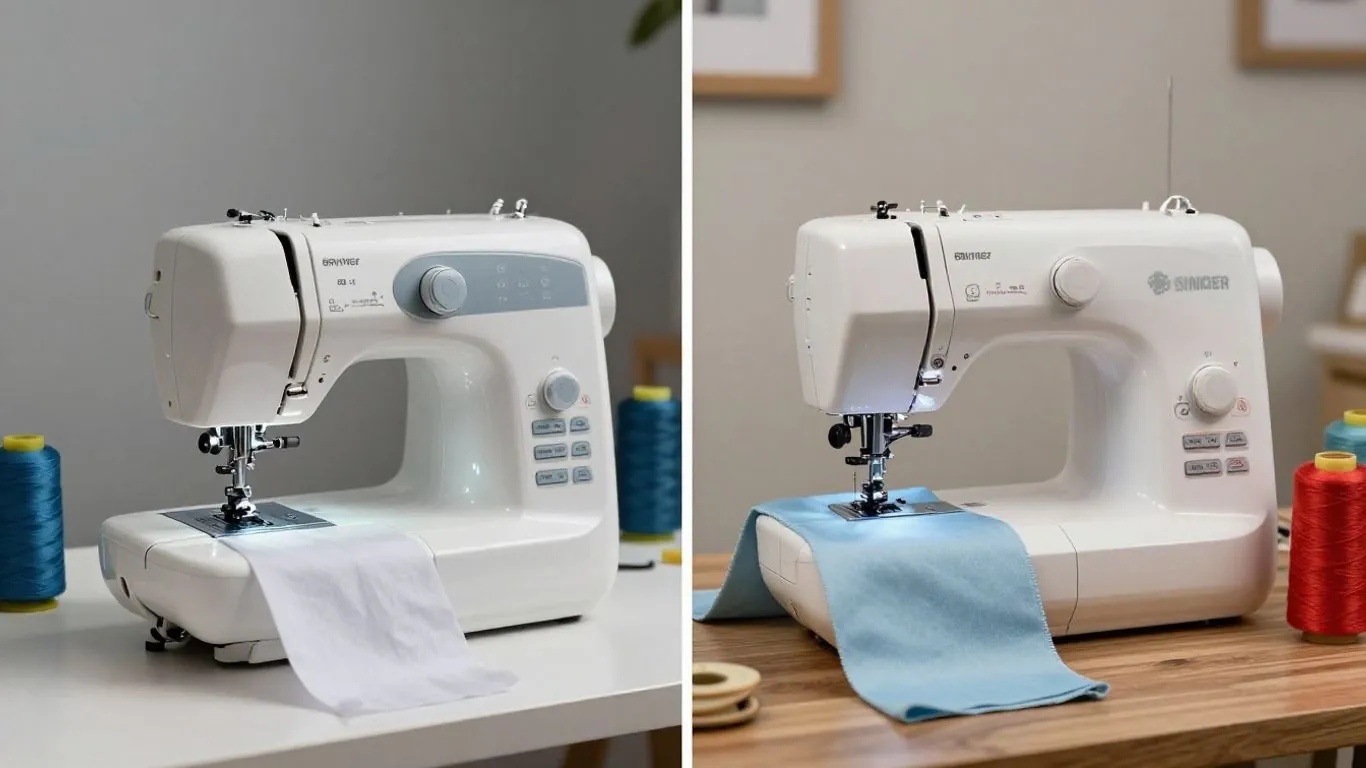
Both brands have made sewing machines for over a century, but they aim at different buyers today. Brother focuses on computerized machines with lots of stitches and automatic features. Singer still sells mechanical workhorses alongside its computerized range. Here’s how the main ways to buy into each brand compare.
| Choice | How long it lasts | Effort to learn | Cost | Best for |
|---|---|---|---|---|
| New Brother computerized | Years of regular use | Low | Low to medium | Beginners, quilting, buttonholes |
| New Singer Heavy Duty | Decades with care | Medium | Medium | Denim, canvas, thick seams |
| Refurbished or older Singer | Decades | Medium to high | Low | Budget buyers who can service it |
| New Singer computerized | Years of regular use | Low | Medium | Singer loyalists wanting features |
No single row wins everything. Brother takes the learning curve and price; Singer takes raw power and lifespan on the mechanical side.
Buying a Brother computerized machine
Brother’s computerized models, like the CS7000X or the LX series, do most of the work for you. You pick a stitch on a screen or dial, and the machine sets the length and width automatically. That’s why they suit anyone who has never touched a sewing machine before.
- Pick your model by project type. A basic 17-stitch machine (around the LX3817 level) handles clothes and mending; a 70-stitch model like the CS7000X adds quilting stitches and a wider table.
- Check what’s in the box. Most Brother machines include several presser feet, a needle set, and a bobbin cover — buying these separately adds real money.
- Thread it using the numbered guide on the machine body. Follow the arrows in order; skipping the take-up lever is the most common threading mistake and it costs you a nest of tangled thread underneath.
- Test on two layers of scrap fabric from your actual project before you start. If the stitch looks loose, turn the tension dial one number at a time.
- Use the needle the manual names for your fabric. A universal 80/12 needle covers most cotton and polyester work; switch to a 90/14 for denim.
Brother machines are light, which makes them easy to carry to classes but means they vibrate and “walk” on very thick fabric. If you plan to sew through layers of denim weekly, a heavy-duty machine is the better tool.
Buying a Singer Heavy Duty machine

Singer’s Heavy Duty line — the 4411, 4423, 4452 and their variants — uses a metal frame and a stronger motor than most home machines. These are mechanical machines: you turn dials rather than tap a screen, so there’s less to break and less to learn electronically.
- Choose your stitch count tier. The 4411 offers 11 stitches, the 4423 offers 23, and the 4452 adds extras like a walking-presser-foot-friendly setup. Most mending and garment sewing needs fewer than 15 stitches.
- Plan your workspace. These machines weigh more than 14 pounds because of the metal frame, so they don’t travel well but they stay put while you sew.
- Set stitch length with the dial — around 2.5 mm for general sewing, 3 to 4 mm for topstitching or thick seams.
- Sew thick seams slowly. Even a Heavy Duty machine strains through six layers of denim; going at half speed on those seams protects the motor and the needle.
- Oil the machine as the manual describes. Mechanical machines need a drop of sewing machine oil at the marked points every so often — computerized machines generally don’t.
The weakness is the learning curve and the noise. Dials mean you set stitch width and length yourself, and the motor is loud compared to a Brother. If you mostly make clothes from cotton and want quiet, automatic sewing, this isn’t your machine.
Buying refurbished or older
A used Singer from the 1970s or earlier — a Featherweight, a Slant-O-Matic, or a similar all-metal model — can outlast any new machine at a fraction of the price. The trade-off is that you buy from a person, not a factory warranty.
- Buy only from a seller who lets you test it, or from a repair shop that has serviced the machine and offers a short guarantee.
- Check that it runs in both directions and that the stitch looks even on scrap fabric before money changes hands.
- Budget for a service. A machine that has sat unused for years usually needs a clean, oil, and new needle — expect that cost on top of the purchase price.
A fourth option, the new Singer computerized range (the Stylist and Legacy lines), sits between these two: more features than the Heavy Duty, a lighter build than the old metal machines. It rarely beats either one at its own game, so most buyers do better picking a side.
Which machine fits your situation
The trade-off from the start holds everywhere: Brother trades muscle for ease, and Singer trades ease for muscle. Which side matters more depends on what you sew.
- If you’re in a hurry to start sewing this week, buy the Brother. It threads faster, the automatic settings remove guesswork, and you’ll be stitching within an hour of unboxing.
- If it’s your first machine, buy the Brother too. The numbered guides and preset stitches mean fewer things to get wrong while you’re still learning to steer fabric.
- If you want the best possible result on heavy fabric, buy the Singer Heavy Duty. The metal frame and stronger motor push through denim, canvas, and multiple layers without stalling.
There’s one more fork: if you sew heavy fabric only a few times a year, don’t buy the Heavy Duty for it. A Brother with a 90/14 needle and slow sewing handles occasional denim fine, and you keep the easy machine for everything else.
Rules that matter either way
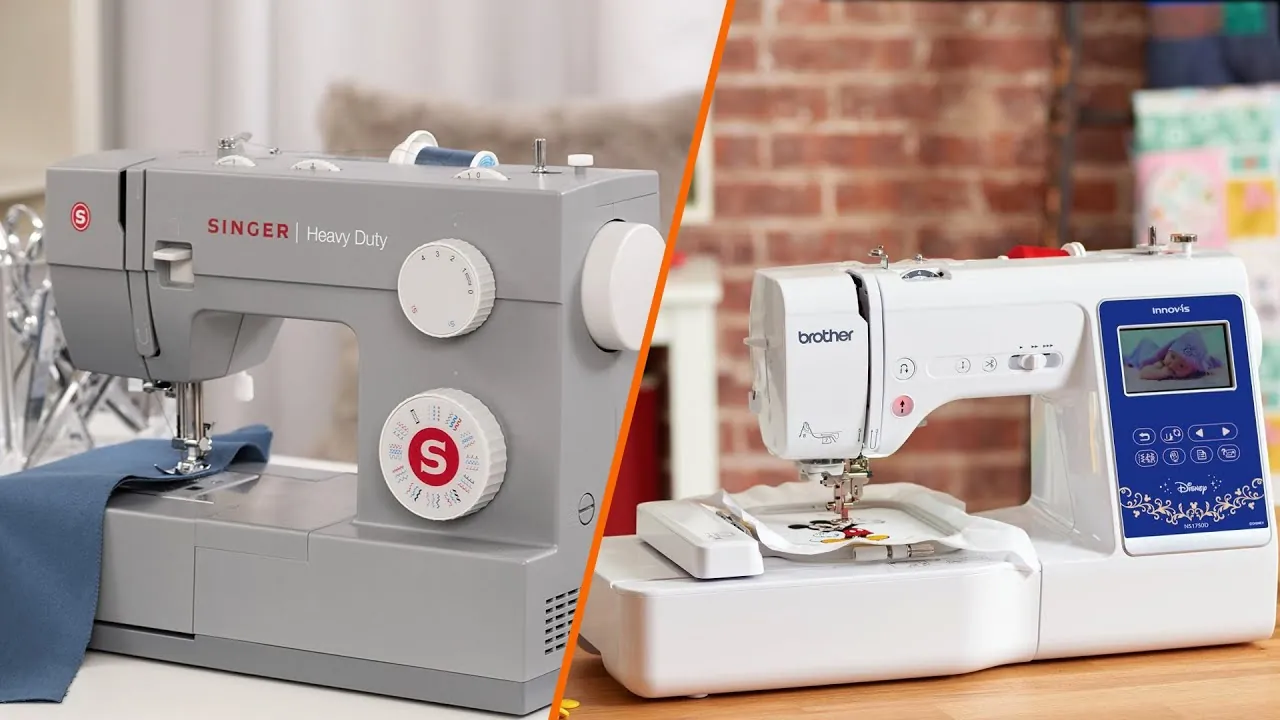
Whichever badge is on the machine, the same things decide whether you’ll still like it in a year.
- Match the machine to the fabric, not the brand. Every maker publishes what its machines can sew through. You can browse Brother’s current sewing machine lineup to compare stitch counts and included feet across models before you commit.
- Check the warranty before you buy. Singer’s Heavy Duty line and Brother’s home machines carry limited warranties of 25 years on some parts but far shorter coverage on electrical parts — read the actual warranty terms for the exact model, because they differ.
- Test before your real project. Sew a seam on scrap from the same fabric, check the tension, and change the needle if it skips. Five minutes here saves a ruined garment.
- Keep the manual and the receipt. Tension problems, skipped stitches, and thread nests are all in the troubleshooting pages, and the receipt is what turns a warranty claim into a repair instead of a new purchase.
None of this needs a technician. The point where you stop and call a repair shop is a burning smell, a snapped needle lodged in the bobbin case, or a machine that won’t run at all after a fall.
Frequently asked questions
Is Brother a good brand for beginners?
Yes. Brother’s entry-level computerized machines thread with numbered guides, set stitch length automatically, and cost less than most Singer equivalents. They’re also lighter, so they’re easy to carry to a class. Their limit is thick fabric — for regular denim work, step up to a heavier machine.
How long do Singer sewing machines last?
Roughly 20 to 30 years for a modern machine with ordinary care, and far longer for the old all-metal models — some mid-century Singers still run daily. The one thing that decides your machine’s life is whether it gets cleaned and oiled; lint buildup kills more machines than age does. Check your model’s manual for its service schedule.
Can a Brother machine sew denim?
Yes, occasionally. Use a 90/14 or 100/16 jeans needle, lengthen the stitch to about 3 mm, and sew slowly through no more than a few layers. If you sew denim or canvas every week, a metal-frame Singer Heavy Duty will handle it without the strain and skipped stitches a light machine shows.
Why is my new sewing machine skipping stitches?
Usually the needle. A bent, dull, or wrong-size needle causes most skipped stitches, so replace it first and check it’s fully pushed up into the clamp. Wrong thread tension and lint under the needle plate come next. If a fresh needle doesn’t fix it after rethreading both top and bobbin, take it to a dealer for service.
What happens if I use the wrong needle size?
The stitch suffers before the machine does. Too fine a needle bends or snaps on thick fabric and skips stitches; too heavy a needle leaves visible holes in light fabric. Match the size to the fabric — 70/10 for sheer, 80/12 for cotton, 90/14 or above for denim — and you avoid both problems.
Is it safe to leave a sewing machine plugged in?
Not ideal. A foot pedal can be pressed accidentally, and surges can damage the motor’s electronics. Unplug it when you finish for the day, especially in a house with children. It’s a ten-second habit that removes the main risks entirely.
Conclusion
Brother or Singer, you’re choosing between ease and muscle, not good and bad. Pick the one that matches the fabric you actually sew, test it on scrap before your first real project, and either brand will serve you for years.
{“@context”:”https://schema.org”,”@type”:”FAQPage”,”mainEntity”:[{“@type”:”Question”,”name”:”Is Brother a good brand for beginners?”,”acceptedAnswer”:{“@type”:”Answer”,”text”:”Yes. Brother’s entry-level computerized machines thread with numbered guides, set stitch length automatically, and cost less than most Singer equivalents. They’re also lighter, so they’re easy to carry to a class. Their limit is thick fabric — for regular denim work, step up to a heavier machine.”}},{“@type”:”Question”,”name”:”How long do Singer sewing machines last?”,”acceptedAnswer”:{“@type”:”Answer”,”text”:”Roughly 20 to 30 years for a modern machine with ordinary care, and far longer for the old all-metal models — some mid-century Singers still run daily. The one thing that decides your machine’s life is whether it gets cleaned and oiled; lint buildup kills more machines than age does. Check your model’s manual for its service schedule.”}},{“@type”:”Question”,”name”:”Can a Brother machine sew denim?”,”acceptedAnswer”:{“@type”:”Answer”,”text”:”Yes, occasionally. Use a 90/14 or 100/16 jeans needle, lengthen the stitch to about 3 mm, and sew slowly through no more than a few layers. If you sew denim or canvas every week, a metal-frame Singer Heavy Duty will handle it without the strain and skipped stitches a light machine shows.”}},{“@type”:”Question”,”name”:”Why is my new sewing machine skipping stitches?”,”acceptedAnswer”:{“@type”:”Answer”,”text”:”Usually the needle. A bent, dull, or wrong-size needle causes most skipped stitches, so replace it first and check it’s fully pushed up into the clamp. Wrong thread tension and lint under the needle plate come next. If a fresh needle doesn’t fix it after rethreading both top and bobbin, take it to a dealer for service.”}},{“@type”:”Question”,”name”:”What happens if I use the wrong needle size?”,”acceptedAnswer”:{“@type”:”Answer”,”text”:”The stitch suffers before the machine does. Too fine a needle bends or snaps on thick fabric and skips stitches; too heavy a needle leaves visible holes in light fabric. Match the size to the fabric — 70/10 for sheer, 80/12 for cotton, 90/14 or above for denim — and you avoid both problems.”}},{“@type”:”Question”,”name”:”Is it safe to leave a sewing machine plugged in?”,”acceptedAnswer”:{“@type”:”Answer”,”text”:”Not ideal. A foot pedal can be pressed accidentally, and surges can damage the motor’s electronics. Unplug it when you finish for the day, especially in a house with children. It’s a ten-second habit that removes the main risks entirely.”}}]}