Brother or Janome Sewing Machine: Which Should You Get?
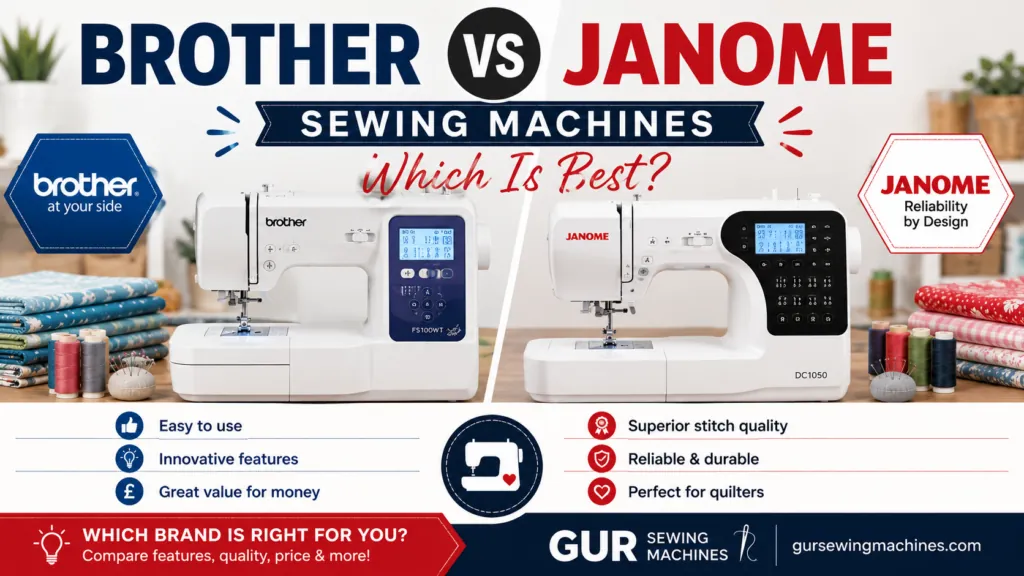
Yes — for most people, a Brother or Janome sewing machine comes down to one thing: Brother wins on price and easy learning, Janome wins on stitch quality and quiet running. If you sew light cotton and want to spend less, pick Brother; if you sew daily or quilt, pick Janome. Check your local dealer’s return window before you buy.
When a Brother or Janome sewing machine fits

The right pick depends on what you sew and how often. A person who makes a few masks and hemmed curtains is a different buyer from someone quilting every weekend. Use the table below to find your own row.
| Your situation | Answer | Why |
|---|---|---|
| First machine, light cotton, under $200 | Brother | Cheaper entry models, simple controls |
| Quilting with thick layers | Janome | Stronger feed, fewer skipped stitches |
| Sewing near a sleeping baby | Janome | Runs quieter at low speed |
| Tight budget, still learning | Brother | More features per dollar |
| Sewing denim or canvas often | Janome | Handles heavy fabric better |
| Need a dealer nearby for repairs | Either | Check who services your area first |
| Want the cheapest machine, no plans to grow | Brother | Entry models do the basic job |
One row here gives the opposite answer from the verdict above. If you never sew past light cotton and just want the lowest price, Brother is the better call even though Janome generally edges ahead on build quality. Price beats quality only when your fabric stays thin.
Check the machine’s own spec sheet for the stitch count and the maximum fabric weight it lists. Brother and Janome both publish these on their official product pages, so you don’t have to guess.
What actually decides it
Fabric weight and sewing frequency decide this, not the brand name on the front. A machine rated for light cotton will fight you on denim no matter who made it. The motor, the metal in the feed dogs, and the presser foot pressure are what hold up under thick layers. Janome tends to put more metal in these parts at the same price point. Brother tends to put more features — more stitches, more buttonhole styles — into the same budget.
Frequency matters too. A machine used twice a month lasts years on either brand. A machine used daily wears the plastic gears faster, and that’s where the cheaper models show their limit. If you sew most days, the stronger build pays for itself.
The catch here is this: stitch quality and motor strength vary by model, not just by brand. Read your own machine’s spec sheet — the amp rating and the listed fabric types tell you more than any brand comparison.
If you sew light fabric a few times a month, buy Brother and save the money; if you sew heavy fabric or sew daily, buy Janome and skip the cheapest tier.
How to pick the right model
Follow these steps once you’ve decided on a brand. Each one takes minutes and saves you from a bad buy.
- Set your fabric limit first. Write down the heaviest thing you’ll sew — denim, canvas, quilt layers. Check the machine’s listed fabric weight on the maker’s official page. If your fabric is heavier than the listing, that model is wrong for you.
- Match the motor to your frequency. Sewing a few times a month needs a standard motor; sewing daily needs a stronger one. The amp rating is on the spec sheet. A higher amp number handles thicker fabric without slowing.
- Count the stitches you’ll actually use. Most people use five or six stitches, not forty. A machine with fewer stitches but a better feed system beats one with more stitches and a weak feed. Check the stitch list against what you sew.
- Test the sound and feel in person if you can. A dealer will let you run fabric through. Listen at low speed — that’s where the noise difference shows. If no dealer is near you, read the return policy before ordering online.
- Confirm the warranty length in writing. Both brands publish warranty terms on their official sites. Note the mechanical and electronic coverage separately, because they differ.
- Check who repairs it near you. Ask the seller which local shop services that brand. A machine with no nearby repair option costs you shipping both ways if it breaks.
The sign a step worked: you can name your heaviest fabric, your motor rating, and your repair shop before you pay.
The mistake that costs the most
Buying on stitch count alone is the mistake that costs people the most. A machine listing 60 stitches looks better than one listing 20, so buyers pick the 60-stitch model — then find the feed dogs slip on anything thicker than two layers of cotton. The extra stitches sit unused while the machine fails at the one job that matters.
The cost is real: a machine that skips stitches on your project means unpicking seams and re-sewing them, and sometimes a repair bill or a replacement. That’s money and weekends gone.
The fix is one check. Before you buy, look at the amp rating and the listed fabric weight on the maker’s official page. Compare those two numbers between models, not the stitch count. A lower stitch count with a stronger motor serves you better than the reverse.
When to stop and get help

Some problems are past what you can fix at home. Stop and call a professional when:
- The machine makes a grinding noise or smells like burning — that’s an internal fault, and a technician handles it.
- Stitches stay loose after you’ve rethreaded and changed the needle — the timing is off, and that needs a trained repair tech.
- The machine won’t power on after you’ve checked the outlet and the cord — an electrical fault, so take it to a service center.
- You’re inside the warranty period and something fails — contact the maker’s official support, because opening the machine yourself can void the coverage.
Never open the housing or touch the internal parts. A sewing machine can hold a charge even when unplugged, and the gears and needle bar can injure your hands. Leave internal work to a trained technician.
Frequently asked questions
Is Brother or Janome better for beginners?
Brother is usually better for beginners, because its entry models cost less and have simpler controls. Janome suits a beginner who already knows they’ll sew often and wants a machine that lasts longer. If you’re unsure, start with a basic Brother and upgrade later once you know your fabric habits.
How long do these machines last?
A home sewing machine lasts longer with regular cleaning and oiling, depending on use. A machine used twice a month sits at the top of that range; one used daily sits lower. Check your model’s manual for the service schedule it recommends.
Can a Brother machine sew denim?
Some Brother models sew denim, but only the stronger ones. Check the amp rating and the listed fabric weight on the official product page before you buy. A basic entry model will struggle and may skip stitches. Use a denim needle and go slow if your model is rated for it.
Why does my machine skip stitches on thick fabric?
Skipped stitches on thick fabric usually mean the needle is too thin or the machine’s feed can’t push the layers through. Switch to a heavier needle made for denim or canvas. If it still skips, your machine’s motor may be too weak for that fabric.
Is it safe to open my sewing machine to fix it?
No — don’t open the housing yourself. Internal parts can hold a charge, and the needle bar and gears can injure your hands. Take it to a trained technician. Opening it can also void your warranty, so check the terms first.
What happens if I buy the wrong brand?
You lose money on the resale and time on the return. Most sellers give a return window, so check it before you buy. If the window has passed, you can often sell a lightly used machine and recover part of the cost.
Does it matter which brand I pick for quilting?
Yes, it matters for quilting. Janome generally handles thick quilt layers better because of its stronger feed system. Brother can quilt lighter projects fine. Check the machine’s throat space and listed fabric weight before you decide.
How much should I spend on a first machine?
A first machine is inexpensive relative to the alternative, assuming you sew light to medium fabric a few times a month. Below that range, the motor and feed are weak. Above it, you’re paying for features a beginner won’t use yet.
Pick your brand, then check the spec sheet
Decide your heaviest fabric and how often you sew before you pick a brand. Then open the official product page and compare the amp rating and listed fabric weight between your two shortlisted models. You’ll know you chose right when the machine feeds your thickest project without skipping. If it grinds, smells like burning, or won’t power on, stop and take it to a technician.
{“@context”:”https://schema.org”,”@type”:”FAQPage”,”mainEntity”:[{“@type”:”Question”,”name”:”Is Brother or Janome better for beginners?”,”acceptedAnswer”:{“@type”:”Answer”,”text”:”Brother is usually better for beginners, because its entry models cost less and have simpler controls. Janome suits a beginner who already knows they’ll sew often and wants a machine that lasts longer. If you’re unsure, start with a basic Brother and upgrade later once you know your fabric habits.”}},{“@type”:”Question”,”name”:”How long do these machines last?”,”acceptedAnswer”:{“@type”:”Answer”,”text”:”A home sewing machine lasts longer with regular cleaning and oiling, depending on use. A machine used twice a month sits at the top of that range; one used daily sits lower. Check your model’s manual for the service schedule it recommends.”}},{“@type”:”Question”,”name”:”Can a Brother machine sew denim?”,”acceptedAnswer”:{“@type”:”Answer”,”text”:”Some Brother models sew denim, but only the stronger ones. Check the amp rating and the listed fabric weight on the official product page before you buy. A basic entry model will struggle and may skip stitches. Use a denim needle and go slow if your model is rated for it.”}},{“@type”:”Question”,”name”:”Why does my machine skip stitches on thick fabric?”,”acceptedAnswer”:{“@type”:”Answer”,”text”:”Skipped stitches on thick fabric usually mean the needle is too thin or the machine’s feed can’t push the layers through. Switch to a heavier needle made for denim or canvas. If it still skips, your machine’s motor may be too weak for that fabric.”}},{“@type”:”Question”,”name”:”Is it safe to open my sewing machine to fix it?”,”acceptedAnswer”:{“@type”:”Answer”,”text”:”No — don’t open the housing yourself. Internal parts can hold a charge, and the needle bar and gears can injure your hands. Take it to a trained technician. Opening it can also void your warranty, so check the terms first.”}},{“@type”:”Question”,”name”:”What happens if I buy the wrong brand?”,”acceptedAnswer”:{“@type”:”Answer”,”text”:”You lose money on the resale and time on the return. Most sellers give a return window, so check it before you buy. If the window has passed, you can often sell a lightly used machine and recover part of the cost.”}},{“@type”:”Question”,”name”:”Does it matter which brand I pick for quilting?”,”acceptedAnswer”:{“@type”:”Answer”,”text”:”Yes, it matters for quilting. Janome generally handles thick quilt layers better because of its stronger feed system. Brother can quilt lighter projects fine. Check the machine’s throat space and listed fabric weight before you decide.”}},{“@type”:”Question”,”name”:”How much should I spend on a first machine?”,”acceptedAnswer”:{“@type”:”Answer”,”text”:”A first machine is inexpensive relative to the alternative, assuming you sew light to medium fabric a few times a month. Below that range, the motor and feed are weak. Above it, you’re paying for features a beginner won’t use yet.”}}]}