7 Common Sewing Machine Troubles: Free Printable PDF List
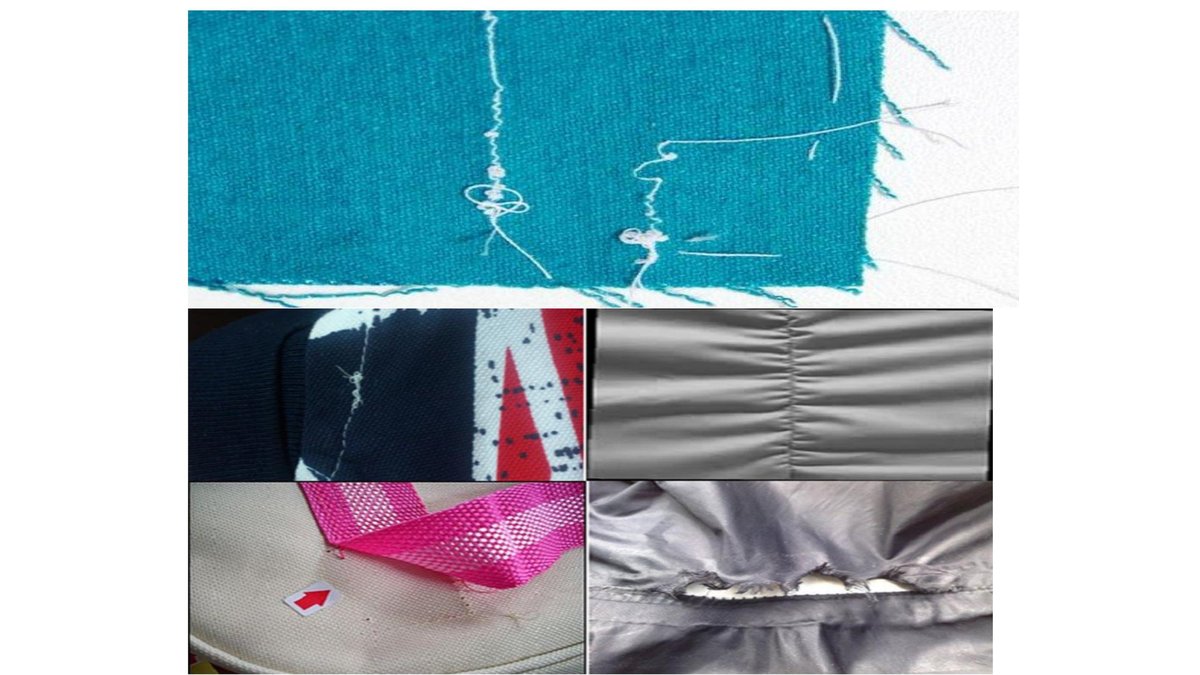
Sewing machine troubles usually fall into seven groups: upper thread breaks, bobbin thread tangles, skipped stitches, needle breaks, thread bunches under the fabric, uneven stitch length, and fabric that won’t feed. If you’re searching for a printable list of the 7 common sewing machine troubles as a PDF, no single official document exists — you’ll find the same seven problems in most machine manuals, and you can save or print any guide yourself.
What decides whether you fix it fast
The tension dial is where most people go wrong first. It controls the upper thread only, and the bobbin case has its own separate setting. Turning the top dial to fix a bobbin problem makes both threads worse, and you’ll spend an hour chasing a fault that wasn’t there.
Clean the bobbin area before you touch any setting. Lint and broken thread under the needle plate cause skipped stitches and tangles more often than tension does. Your manual shows exactly where to clean — follow that page, not a video from a different model.
The 7 common sewing machine troubles and how to fix each
Work through these in order. Each fix takes under 5 minutes once you know which part to adjust.
-
Upper thread breaks. Stop the machine and re-thread from the spool with the presser foot up, so the thread sits inside the tension discs. Check the spool cap is snug — a thread catching on the spool edge snaps within a few stitches. Tip: If it breaks at the needle every time, the needle is blunt or the wrong size for the thread. Change it.
-
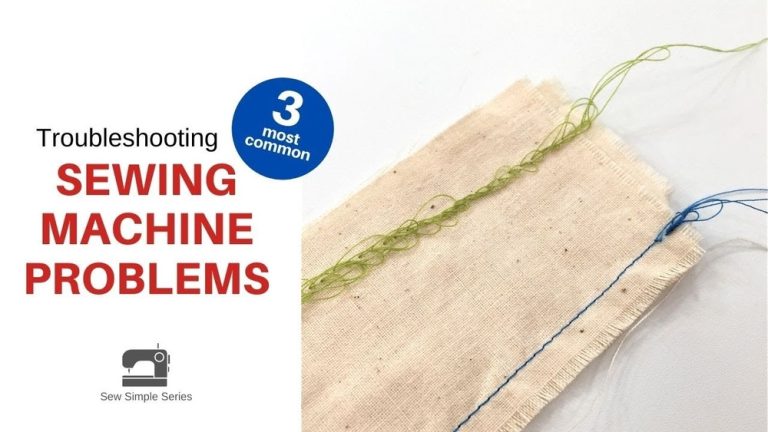
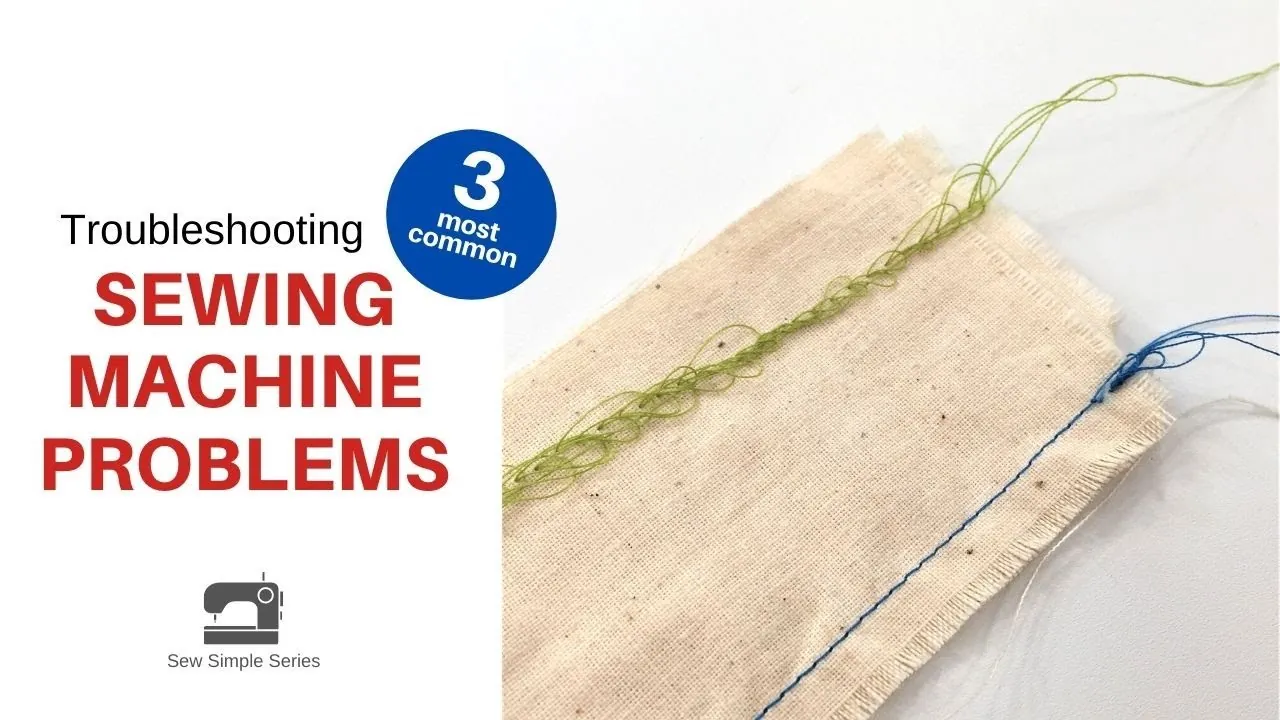
Bobbin thread tangles underneath. Remove the bobbin, clean the case, and check the thread is wound evenly and not crossed. Reinsert it so the thread pulls against the case’s rotation direction, which your manual shows with an arrow. Tip: If the tangle looks like a bird’s nest, the upper thread isn’t in the tension discs. Re-thread the top before adjusting anything.
-
Skipped stitches. Fit a new needle of the correct type — a ballpoint for knits, a sharp for wovens — and make sure it’s pushed all the way up into the clamp. A bent needle skips even when everything else is right.
-
Needle breaks. Match needle size to fabric weight: a 70/10 for light cotton, a 90/14 for denim. Pull the fabric gently — never push or drag it, because that bends the needle into the plate.
-
Thread bunches under the fabric. Raise the presser foot, take the fabric out, and cut the tangled thread. Then re-thread both threads and test on a scrap of the same fabric before you sew the real piece.
-
Uneven stitch length. Check the stitch length dial hasn’t drifted, and clean the feed dogs with a small brush. Lint packed between the teeth stops the fabric moving at a steady rate.
-
Fabric won’t feed. Lower the feed dogs if they’re dropped, and check the stitch selector isn’t set to a darning or free-motion setting. For very fine fabric, place a sheet of tissue paper under it and tear it away after.
If your machine is still skipping after a new needle and a clean bobbin area, or if it makes a loud grinding noise, stop. That points to timing or the internal mechanism — take it to a qualified repair technician. Opening the housing yourself can void the warranty, and some parts hold a charge even when unplugged.
How long each fix takes
Most of these are quick once you’ve found the cause, but the first time you hunt for a fault it takes longer. The table below assumes a standard domestic machine with a fresh needle and a full bobbin.
| Situation | How long | What changes it | What to watch for |
|---|---|---|---|
| Thread breaks, re-thread only | 2-5 min | Whether the spool is wound evenly | Thread catching on the spool edge |
| Bobbin tangle, clean and reset | 10-20 min | How much lint is packed in the case | Thread crossed inside the case |
| Skipped stitches, new needle | 5 min | Needle type matching the fabric | Needle not pushed fully up |
| Full clean and re-thread | 30-45 min | Machine age and how often you clean it | Lint under the needle plate |
| Timing or tension fault | Not a home job | Needs a technician and parts | Grinding noise, or a bent hook |
If a fix is taking far longer than the table says, stop adjusting and re-thread from scratch. Most “unfixable” machines are just threaded wrong somewhere between the spool and the needle.
Signs the fix actually worked
Sew a test line on a scrap of the same fabric you’re using, about 4 inches long. Look at both sides: the top and bottom stitches should meet in the middle of the fabric, with no loops on either face. If loops show on the bottom, the upper tension is too loose; loops on top mean it’s too tight.
Listen as you sew. A steady, even sound means the hook is picking up the thread cleanly. A thump or a click once per stitch points to a burr on the hook or a bent needle, and no setting change will fix that.
Pull the test seam gently in both directions. The stitches should hold without gaps opening. The American Sewing Guild and your machine’s own manual both publish tension and needle charts by fabric type — check those before you adjust the dial further.
Mistakes that make it worse

- Adjusting the bobbin tension first. The bobbin screw is set at the factory and rarely needs moving. Turning it usually makes the problem worse and is hard to undo — set the upper tension first, and only touch the bobbin screw if the manual says to.
- Using a blunt or wrong needle. A dull needle punches instead of piercing, so it skips, breaks thread, and can tear the fabric. Change the needle every 8 to 10 hours of sewing, or sooner on heavy fabric.
- Sewing over pins. The needle can hit a pin and break, and the broken tip can fly toward your face. Remove each pin as you reach it instead.
- Winding the bobbin by hand unevenly. Loose or crossed winding causes tangles no tension setting can fix. Use the machine’s bobbin winder and fill it at a steady speed.
- Skipping the manual for your model. Threading paths differ between brands, and a step that works on one machine jams another. Keep your model’s manual nearby — most makers offer it as a free download.
Frequently asked questions
What are the 7 common sewing machine troubles?
They’re upper thread breaking, bobbin thread tangling, skipped stitches, needle breakage, thread bunching under the fabric, uneven stitch length, and fabric not feeding. Almost every fault you’ll meet fits one of these seven. Each has a simple home fix — re-thread, clean, change the needle, or adjust tension — before it needs a technician.
Can I fix these troubles myself?
Yes, most of them. Re-threading, cleaning the bobbin area, changing the needle, and adjusting upper tension are all safe home fixes. Stop and call a technician if you hear grinding, if the machine jams repeatedly after a clean, or if the problem stays after a new needle and correct threading. Internal timing and hook repairs aren’t a home job.
How long does a sewing machine tune-up take?
A professional service usually takes 3 to 7 days if the shop sends it out, or about an hour if they do it in-store while you wait. That assumes a standard domestic machine with no broken parts. Ask your local shop for their current turnaround, since it changes with their backlog and whether parts need ordering.
Why does my bobbin thread keep tangling?
It usually happens because the upper thread isn’t seated in the tension discs, or the bobbin is wound unevenly. Re-thread the top with the presser foot up, then check the bobbin for crossed thread. If both are correct and it still tangles, clean the bobbin case — packed lint stops the thread feeding smoothly.
Is it safe to open the machine to fix it?
No, not for a home user. The housing protects moving parts and electrical components, and some parts can hold a charge even when the machine is unplugged. Unplug it, clean only what your manual says you may clean, and leave everything inside the casing to a qualified technician.
What happens if I keep sewing with a bent needle?
You’ll get skipped stitches and broken thread, and the needle can snap and fly out. A bent needle also strikes the needle plate, which can knock the machine’s timing out. That turns a 5-minute needle change into a repair bill. Stop and fit a new needle as soon as you feel or hear it hitting.
How often should I clean my sewing machine?
Clean the bobbin area and under the needle plate after every 8 to 10 hours of sewing, or after every big project. That’s for normal fabrics — if you sew fleece, felt or anything that sheds, clean after each session. Lint is the single biggest cause of skipped stitches and tangles.
Conclusion
The seven troubles above cover nearly everything a home machine throws at you, and the fixes are cheap: a new needle, a clean bobbin case, and correct threading solve most of them. Keep your model’s manual within reach, work through the list in order, and know when to hand it to a technician.
{“@context”:”https://schema.org”,”@type”:”FAQPage”,”mainEntity”:[{“@type”:”Question”,”name”:”What are the 7 common sewing machine troubles?”,”acceptedAnswer”:{“@type”:”Answer”,”text”:”They’re upper thread breaking, bobbin thread tangling, skipped stitches, needle breakage, thread bunching under the fabric, uneven stitch length, and fabric not feeding. Almost every fault you’ll meet fits one of these seven. Each has a simple home fix — re-thread, clean, change the needle, or adjust tension — before it needs a technician.”}},{“@type”:”Question”,”name”:”Can I fix these troubles myself?”,”acceptedAnswer”:{“@type”:”Answer”,”text”:”Yes, most of them. Re-threading, cleaning the bobbin area, changing the needle, and adjusting upper tension are all safe home fixes. Stop and call a technician if you hear grinding, if the machine jams repeatedly after a clean, or if the problem stays after a new needle and correct threading. Internal timing and hook repairs aren’t a home job.”}},{“@type”:”Question”,”name”:”How long does a sewing machine tune-up take?”,”acceptedAnswer”:{“@type”:”Answer”,”text”:”A professional service usually takes 3 to 7 days if the shop sends it out, or about an hour if they do it in-store while you wait. That assumes a standard domestic machine with no broken parts. Ask your local shop for their current turnaround, since it changes with their backlog and whether parts need ordering.”}},{“@type”:”Question”,”name”:”Why does my bobbin thread keep tangling?”,”acceptedAnswer”:{“@type”:”Answer”,”text”:”It usually happens because the upper thread isn’t seated in the tension discs, or the bobbin is wound unevenly. Re-thread the top with the presser foot up, then check the bobbin for crossed thread. If both are correct and it still tangles, clean the bobbin case — packed lint stops the thread feeding smoothly.”}},{“@type”:”Question”,”name”:”Is it safe to open the machine to fix it?”,”acceptedAnswer”:{“@type”:”Answer”,”text”:”No, not for a home user. The housing protects moving parts and electrical components, and some parts can hold a charge even when the machine is unplugged. Unplug it, clean only what your manual says you may clean, and leave everything inside the casing to a qualified technician.”}},{“@type”:”Question”,”name”:”What happens if I keep sewing with a bent needle?”,”acceptedAnswer”:{“@type”:”Answer”,”text”:”You’ll get skipped stitches and broken thread, and the needle can snap and fly out. A bent needle also strikes the needle plate, which can knock the machine’s timing out. That turns a 5-minute needle change into a repair bill. Stop and fit a new needle as soon as you feel or hear it hitting.”}},{“@type”:”Question”,”name”:”How often should I clean my sewing machine?”,”acceptedAnswer”:{“@type”:”Answer”,”text”:”Clean the bobbin area and under the needle plate after every 8 to 10 hours of sewing, or after every big project. That’s for normal fabrics — if you sew fleece, felt or anything that sheds, clean after each session. Lint is the single biggest cause of skipped stitches and tangles.”}}]}