Is Buying an Embroidery Machine Worth It? Our Honest Verdict
Buying an embroidery machine is worth it if you plan to create custom designs on fabric frequently, as it saves time compared to hand stitching. It’s a smart investment if you enjoy personalizing gifts, starting a small home business, or crafting detailed textile art. If you only need one or two items embroidered, paying a professional service is cheaper than buying equipment.
Quick facts about embroidery machines

- Entry-level home machines typically cost between $300 and $600 depending on the brand and available features.
- You’ll need to buy stabilizer, embroidery thread, bobbins, and needles, which add roughly $50 to your initial setup costs.
- Most machines require a computer connection or a USB drive to load new digital embroidery designs.
- Learning to hoop fabric correctly takes practice, so expect to waste a few yards of scrap fabric during your first week.
- Maintenance, such as cleaning lint from the bobbin case, is required every 10 to 20 hours of sewing time.
Why embroidery machines represent a significant investment
Embroidery machines function by moving a hoop under a needle in precise patterns guided by digital software. This automation allows for complex designs that would take hours to complete by hand, often finishing a detailed logo or monogram in under 15 minutes. The value comes from this speed and the ability to replicate identical designs across many items, which is essential for uniform branding or large gift batches.
The mechanism relies on a motorized frame that coordinates with the needle’s movement. You must choose a machine that handles the size of your intended projects, as most home models have a fixed maximum hoop size. If you try to exceed this limit, the machine will stop or cause the fabric to bunch, ruining the design. You can find specific information on hoop dimensions and design file compatibility on the official Brother support website.
Owning your own machine gives you total control over the creative process without waiting for a print shop or paying minimum order fees. While you must learn basic digitizing software to create original artwork, you can simply focus on accurate file placement if you only use pre-made designs.
When buying an embroidery machine is wrong

| Situation | What changes | What to do instead |
|---|---|---|
| One-time project | High equipment cost | Use local embroidery shop |
| No storage space | Large machine footprint | Rent time at makerspace |
| No time to learn | Steep learning curve | Buy pre-embroidered goods |
| Tight budget | Ongoing supply costs | Stick to hand embroidery |
| Rare usage | Low return on investment | Outsource to professionals |
If you plan to embroider fewer than three items per month, the machine will likely collect dust. Most entry-level machines require constant maintenance, including oiling and tension recalibration, which costs more in frustration than the project is worth.
Avoid buying if you lack a dedicated, dust-free workspace. Embroidery machines are sensitive to lint; placing one on a kitchen table often leads to mechanical failure. If you can’t commit to at least four hours of practice per week, you’ll struggle to master the digitizing software required for custom designs.
When in doubt, calculate the cost of the machine plus stabilizers, needles, and thread against the price of outsourcing to a professional. If the total exceeds the cost of ten custom items, outsource the work. You save money, space, and time by paying for the expertise of others.
How to use an embroidery machine
- Place your fabric into the embroidery hoop, ensuring it’s pulled tight like a drum head without stretching the material out of shape.
- Apply a piece of stabilizer to the back of the fabric to prevent puckering, choosing a cut-away or tear-away type based on your fabric weight.
- Attach the hoop to the machine’s carriage, making sure it clicks into place so the sensor can detect the frame size and position.
- Load your design file using a USB thumb drive or a direct cable connection, then select the pattern on the machine’s touchscreen display.
- Thread the machine with embroidery-specific thread, which is typically thinner and more lustrous than standard sewing thread, and insert a fresh embroidery needle.
- Lower the presser foot and press the start button, keeping your hands away from the moving needle while the machine completes the programmed pattern.
- Check the thread tension after the first few stitches; if you see bobbin thread on the top, adjust your tension settings until the stitches look uniform.
The mistakes that ruin embroidery projects
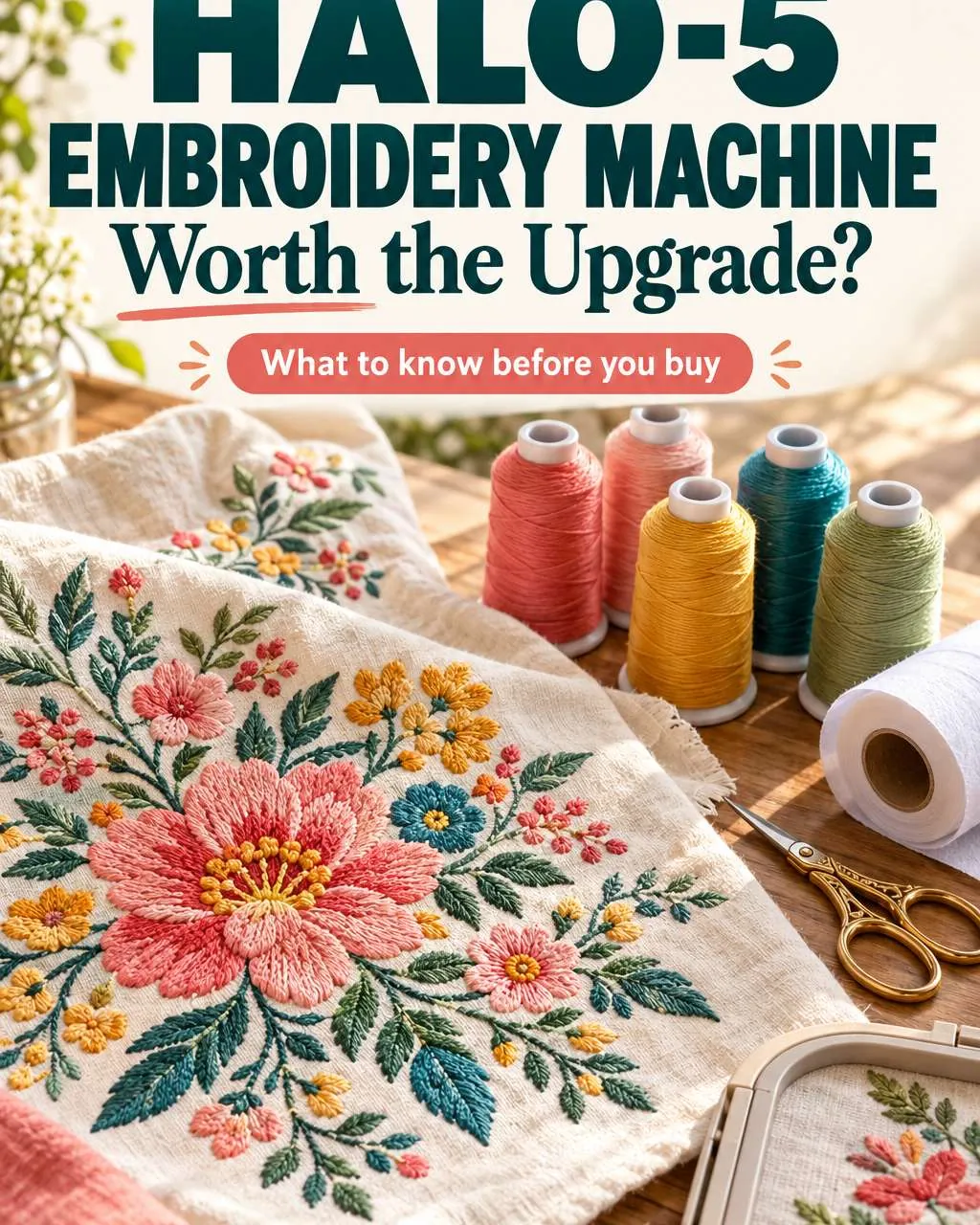
Using standard sewing needles instead of embroidery-specific needles causes thread breakage and permanent fabric damage. Embroidery needles feature a larger eye and a scarf designed to prevent the thread from fraying during high-speed movement.
Failing to use stabilizer leads to bunched or distorted designs that can’t be fixed once the machine finishes. If you’re working with lightweight cotton, use a tear-away stabilizer. For stretchy knits, always opt for a cut-away version to maintain structural integrity.
Buying cheap, low-quality thread results in constant tangles and snapped ends. This forces you to restart entire projects, wasting hours of labor. Stick to high-tensile polyester or rayon threads to ensure consistent tension.
Neglecting to clean the bobbin area allows lint to build up, causing skipped stitches or machine jams. Vacuum the race after every two projects to prevent costly timing issues that require professional repairs.
Frequently asked questions
How much does it cost to maintain an embroidery machine?
You should expect to spend about $20 to $50 annually on basic supplies like needles, machine oil, and specialized cleaning brushes. This assumes you use the machine for personal hobby projects; if you run a small business, you’ll need to replace parts like the bobbin case or needle plate more often due to heavy wear.
Is it safe for children to use these machines?
The machine is safe for older children under adult supervision, though you must exercise caution due to the high-speed needle movement.
How long does it take to learn embroidery?
Most people feel comfortable with their machine after 10 to 15 hours of practice. This includes learning to hoop fabric, load designs, and troubleshoot tension, though mastering complex digitizing software can take several months of regular study and experimentation.
Can I use these machines for quilting?
You can use an embroidery machine for quilting if the model includes a large enough throat space and specific embroidery quilting designs. If you have a standard small-hoop machine, you’ll find it difficult to move large quilts through the frame, so check the manufacturer’s manual for your specific model’s quilting capacity.
What happens if the power goes out during embroidery?
The machine will stop immediately, and you’ll need to rely on the “resume” feature found on most modern models to continue from where you left off. If your machine lacks this feature, you’ll have to manually advance the design to the last stitch, which is a difficult process requiring patience.
Does it matter which thread I use?
Use embroidery-specific thread because it’s designed to withstand high-speed movement without snapping or losing its sheen. Standard cotton sewing thread often breaks and results in poor design quality, so always ensure your thread is rated for machine embroidery.
Conclusion
Ultimately, your decision depends on how much you love working with fabric. If you’re ready to bring your creative ideas to life, look for a local sewing shop to test a few models in person. You’ll quickly see if the process feels right for your lifestyle and your future projects.
{“@context”:”https://schema.org”,”@type”:”FAQPage”,”mainEntity”:[{“@type”:”Question”,”name”:”How much does it cost to maintain an embroidery machine?”,”acceptedAnswer”:{“@type”:”Answer”,”text”:”You should expect to spend about $20 to $50 annually on basic supplies like needles, machine oil, and specialized cleaning brushes. This assumes you use the machine for personal hobby projects; if you run a small business, you’ll need to replace parts like the bobbin case or needle plate more often due to heavy wear.”}},{“@type”:”Question”,”name”:”Is it safe for children to use these machines?”,”acceptedAnswer”:{“@type”:”Answer”,”text”:”The machine is safe for older children under adult supervision, though you must exercise caution due to the high-speed needle movement.”}},{“@type”:”Question”,”name”:”How long does it take to learn embroidery?”,”acceptedAnswer”:{“@type”:”Answer”,”text”:”Most people feel comfortable with their machine after 10 to 15 hours of practice. This includes learning to hoop fabric, load designs, and troubleshoot tension, though mastering complex digitizing software can take several months of regular study and experimentation.”}},{“@type”:”Question”,”name”:”Can I use these machines for quilting?”,”acceptedAnswer”:{“@type”:”Answer”,”text”:”You can use an embroidery machine for quilting if the model includes a large enough throat space and specific embroidery quilting designs. If you have a standard small-hoop machine, you’ll find it difficult to move large quilts through the frame, so check the manufacturer’s manual for your specific model’s quilting capacity.”}},{“@type”:”Question”,”name”:”What happens if the power goes out during embroidery?”,”acceptedAnswer”:{“@type”:”Answer”,”text”:”The machine will stop immediately, and you’ll need to rely on the \” resume\” feature found on most modern models to continue from where you left off. If your machine lacks this feature, you’ll have to manually advance the design to the last stitch, which is a difficult process requiring patience.”}},{“@type”:”Question”,”name”:”Does it matter which thread I use?”,”acceptedAnswer”:{“@type”:”Answer”,”text”:”Use embroidery-specific thread because it’s designed to withstand high-speed movement without snapping or losing its sheen. Standard cotton sewing thread often breaks and results in poor design quality, so always ensure your thread is rated for machine embroidery.”}}]}