Common Problems With Janome Sewing Machines and How to Fix Them
Most of the time, common problems with Janome sewing machines come down to thread tension, a worn or wrongly fitted needle, or lint packed under the needle plate — tension and needle trouble cause the majority of the complaints owners report. The fastest way to confirm it: sew a test line on two layers of scrap cotton. If loops show on one side, it’s tension; if stitches skip or the thread shreds, it’s the needle.
Common Janome problems, ranked by cause
A Janome that skips, jams, or sews ugly stitches almost always has one of a handful of causes. Work down this list in order — the top rows are the ones that turn out to be the problem most of the time, and they’re the cheapest to fix.
| Cause | How common | How to confirm it | Fix it yourself? |
|---|---|---|---|
| Upper thread tension wrong | Most of the time | Loops underneath or top thread pulling through | Yes |
| Bent, dull, or wrong needle | Very common | Skipped stitches, shredded or popping thread | Yes |
| Bobbin wound or seated badly | Common | Nesting thread under the plate, uneven stitches | Yes |
| Lint buildup in bobbin area | Common | Machine slows, stitches get messy over one session | Yes with care |
| Threaded with the presser foot down | Fairly common | Thread won’t pick up, breaks right away | Yes |
| Feed dogs lowered or clogged | Occasional | Fabric doesn’t move, stitches pile in one spot | Yes with care |
| Timing or internal wear | Rare | Nothing above fixes it; still skips after a service | No |
Tension trouble: the number one cause
Tension is what presses the upper thread and the bobbin thread together between the fabric layers. When the dial is set wrong — or the machine is threaded with the presser foot down, so the thread never sits in the tension discs — the two threads stop meeting in the middle. You get loops on the underside or the top thread dragging the bobbin thread up through the fabric.
Here’s the confirming test. Thread the machine with the presser foot up, put two layers of scrap cotton under the foot, and sew a straight line at your normal length, usually 2.5 on most Janome dials. Look at both sides. Loops on the bottom mean the upper tension is too loose; the bobbin thread showing on top means it’s too tight.
The fix takes about five minutes and costs nothing. Raise the presser foot, pull the thread out, and rethread from the spool all the way to the needle — most Janome models thread front to back through the take-up lever, but check the diagram printed inside the threading path or your manual on Janome’s official support site.
Then start at tension 4, the midpoint on most dials, and sew another test line. Adjust one number at a time and test after each change. If the tension dial itself feels loose or does nothing no matter where you set it, the spring inside is worn, and that’s a dealer job.
A needle that’s past its job
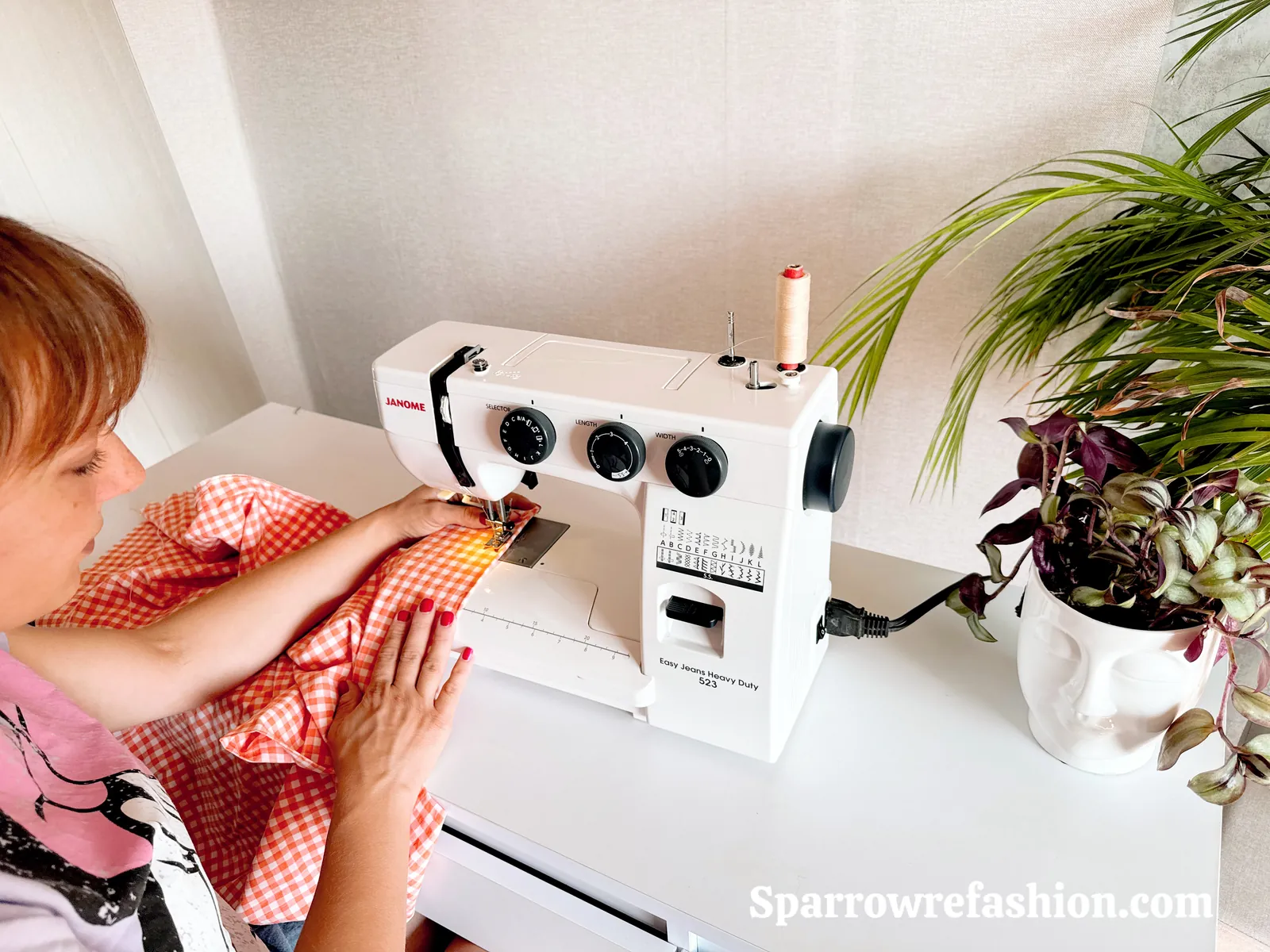
Needles are consumables, and a dull or slightly bent one causes exactly the symptoms people blame on the machine: skipped stitches, a popping sound, thread that frays and breaks, even small holes in the fabric. Sewing with a needle that’s too fine for the fabric causes the same thing — a lightweight universal needle pushed through denim will deflect and skip.
Tell this cause apart from tension by the thread: a bad needle shreds or snaps the thread, while tension trouble leaves it whole. Both sides of a bad needle’s stitching look messy, not just one.
The fix takes two minutes. Loosen the needle clamp screw, push the old needle out, and insert a new one with the flat side of the shank facing the back — that’s standard on Janome home machines. Push it up as far as it will go before tightening.
Match the needle to the fabric: a size 70/10 or 80/12 universal for cottons, a 90/14 for denim or canvas, and a ballpoint needle for knits. Change the needle after roughly one large project or 8 hours of sewing, sooner if it hits a pin. A packet of needles costs about the same as a spool of thread.
Lint and bobbin problems
Lint builds up under the needle plate and around the bobbin case every time you sew, and fuzzy thread or fleece fill it fast. The machine slows down, stitches turn uneven, and the bobbin area can jam solid. A badly wound bobbin — loose, lumpy, or overfull — causes the same nesting mess underneath the fabric.
The check is simple: open the bobbin cover, lift out the bobbin, and look. If you see grey felt-like lint packed around the case, that’s your problem. Clean it with the small brush that came with the machine; a blast of canned air can push lint deeper, so brush instead.
Wipe out the bobbin race area every 3–4 sewing sessions, or after every project in fleece or flannel. Rewind any bobbin that’s lumpy, and fill it at a slow, even speed so the thread sits flat and snug. The whole job takes about ten minutes and costs nothing.
The rarer causes you should know about
These show up far less often, but each has one telltale clue:
- Feed dogs lowered. The fabric stays still and stitches pile up in one place — check the drop-feed switch on the back or side; some Janomes drop the feed dogs for free-motion work.
- Wrong threading order. The thread skips the take-up lever or the thread guide, and the machine won’t pick up the bobbin thread at all.
- Dried-out or wrong oil. The machine runs loud and stiff; only Janome home machines are mostly self-lubricating, so check your manual before adding any oil.
- Timing out of sync. The needle drops but the hook misses it, so stitches never form — this needs a trained technician with the service tools.
- A cracked plastic bobbin. A bobbin that’s been dropped or squeezed catches in the case; hold it up to the light and look for a split.
If nothing in this list fixes it and the machine still skips or seizes, stop there. Internal timing and motor work need a trained technician — opening the case yourself can void what’s left of the warranty and risks real damage.
What fixing it actually takes

Almost every common fix here costs time, not money. Rethreading takes five minutes and nothing else. A new needle takes two minutes and a spare from a packet that costs about the same as one thread spool. Cleaning lint takes ten minutes and the brush already in your accessory box.
The one fix that costs real money is a service — a full professional tune-up runs roughly what a mid-range Janome model‘s accessory kit costs, and it varies by city and dealer, so call your local authorized Janome dealer for a quote and ask whether the machine is still under warranty first.
Frequently asked questions
Why does my Janome keep breaking the top thread?
Most often it’s the needle or the threading. A dull, bent, or wrongly fitted needle shreds thread, and threading with the presser foot down stops the thread seating in the tension discs. Rethread with the foot up, put in a fresh needle with the flat shank to the back, and check the spool isn’t snagging on its pin.
How long should a Janome sewing machine last?
With regular cleaning and a professional service every couple of years, a well-made mechanical Janome commonly serves for decades of home use — but the real number depends on how much you sew and whether it’s ever serviced. Check your model’s manual for the service interval Janome recommends.
Can I fix a Janome myself?
Yes for most problems. Tension, threading, needles, bobbins, and lint are all safe, simple fixes that need no tools beyond the brush in your accessory box. Anything requiring the case to come off — timing, motor, circuit board — is a job for an authorized Janome dealer.
Is it safe to oil my Janome machine?
Only if your manual says so. Many modern Janome home machines are self-lubricating and need no home oiling at all; oiling one that doesn’t need it attracts lint and gums up the mechanics. Check the manual or Janome’s documentation for your exact model before you put oil anywhere.
What happens if I sew with a dull needle?
The stitches skip, the thread frays and snaps, and the needle can pull or snag the fabric threads. On knits it can turn a small hole into a run. The fix costs pennies: swap in a fresh needle matched to your fabric and the problem usually disappears on the first test line.
Does it matter which bobbin I use in a Janome?
Yes. Janome machines are built around specific bobbin sizes and weights, and an off-size bobbin rattles, catches, or sews unevenly. Use the bobbin type listed for your model in the manual, and buy replacements marked for Janome machines rather than a lookalike from a mixed pack.
How often should I clean and service my Janome?
Yes — brush out the bobbin area every 3–4 sewing sessions, or after every project in lint-heavy fabric like flannel or fleece. Book a professional service roughly every couple of years for regular home use, sooner if you sew daily. Check your manual, since the interval varies by model.
Conclusion
Keep your machine’s manual somewhere you can grab it quickly, and jot down what fixes worked when trouble showed up. Over time you’ll build your own troubleshooting guide, and you’ll spot small issues before they turn into big ones. If a problem keeps coming back, a local service shop is worth the visit.
{“@context”:”https://schema.org”,”@type”:”FAQPage”,”mainEntity”:[{“@type”:”Question”,”name”:”Why does my Janome keep breaking the top thread?”,”acceptedAnswer”:{“@type”:”Answer”,”text”:”Most often it’s the needle or the threading. A dull, bent, or wrongly fitted needle shreds thread, and threading with the presser foot down stops the thread seating in the tension discs. Rethread with the foot up, put in a fresh needle with the flat shank to the back, and check the spool isn’t snagging on its pin.”}},{“@type”:”Question”,”name”:”How long should a Janome sewing machine last?”,”acceptedAnswer”:{“@type”:”Answer”,”text”:”With regular cleaning and a professional service every couple of years, a well-made mechanical Janome commonly serves for decades of home use — but the real number depends on how much you sew and whether it’s ever serviced. Check your model’s manual for the service interval Janome recommends.”}},{“@type”:”Question”,”name”:”Can I fix a Janome myself?”,”acceptedAnswer”:{“@type”:”Answer”,”text”:”Yes for most problems. Tension, threading, needles, bobbins, and lint are all safe, simple fixes that need no tools beyond the brush in your accessory box. Anything requiring the case to come off — timing, motor, circuit board — is a job for an authorized Janome dealer.”}},{“@type”:”Question”,”name”:”Is it safe to oil my Janome machine?”,”acceptedAnswer”:{“@type”:”Answer”,”text”:”Only if your manual says so. Many modern Janome home machines are self-lubricating and need no home oiling at all; oiling one that doesn’t need it attracts lint and gums up the mechanics. Check the manual or Janome’s documentation for your exact model before you put oil anywhere.”}},{“@type”:”Question”,”name”:”What happens if I sew with a dull needle?”,”acceptedAnswer”:{“@type”:”Answer”,”text”:”The stitches skip, the thread frays and snaps, and the needle can pull or snag the fabric threads. On knits it can turn a small hole into a run. The fix costs pennies: swap in a fresh needle matched to your fabric and the problem usually disappears on the first test line.”}},{“@type”:”Question”,”name”:”Does it matter which bobbin I use in a Janome?”,”acceptedAnswer”:{“@type”:”Answer”,”text”:”Yes. Janome machines are built around specific bobbin sizes and weights, and an off-size bobbin rattles, catches, or sews unevenly. Use the bobbin type listed for your model in the manual, and buy replacements marked for Janome machines rather than a lookalike from a mixed pack.”}},{“@type”:”Question”,”name”:”How often should I clean and service my Janome?”,”acceptedAnswer”:{“@type”:”Answer”,”text”:”Yes — brush out the bobbin area every 3–4 sewing sessions, or after every project in lint-heavy fabric like flannel or fleece. Book a professional service roughly every couple of years for regular home use, sooner if you sew daily. Check your manual, since the interval varies by model.”}}]}