Best Sewing Machine for Pants | Top Picks & Guides
Sewing the perfect pair of pants, whether jeans, dress slacks, or casual joggers, requires more than just skillful hands and sharp scissors. The right sewing machine for pants can determine whether your project becomes a wardrobe staple or a source of endless frustration. With the growing demand for tailored fits, custom alterations, and even small-batch pant production, choosing the ideal machine is more crucial than ever. From heavy denim to silky polyesters, pants present unique challenges: thick seams, precise topstitching, and durable hems all push a sewing machine to its limits.
But not all sewing machines are created equal. Some excel at handling layers of denim and robust fabrics, while others shine in delivering delicate, fine finishes for trousers and dress pants. Whether you’re a professional tailor, a home sewing enthusiast, or just beginning your journey, understanding what makes a sewing machine great for pants can save you time, money, and frustration. This comprehensive guide covers everything: from must-have features and model comparisons to practical advice, real-world examples, and expert tips to empower you to make the best choice for your sewing goals.
Key Takeaways
- Specialized features such as adjustable presser foot pressure, strong motors, and stitch variety are essential for sewing pants.
- Heavy-duty machines are often best for denim and thick fabrics, while computerized models provide precision for detail work.
- Proper needle and thread selection significantly impacts seam quality and prevents machine damage.
- Real-world examples show that user experience and fabric type should guide machine choice.
- Maintenance and troubleshooting play a critical role in achieving professional results and machine longevity.
Credit: www.yamato-sewing.com
Understanding The Unique Demands Of Sewing Pants
Creating pants involves a set of technical challenges that set it apart from sewing other garments. Unlike T-shirts or skirts, pants require precise fitting, sturdy construction, and often involve working with thick layers of fabric.
The Importance Of Durable Seams And Hems
Pants endure continuous movement and stress at the seams, especially in areas like the crotch, inner thigh, and hem. This means the stitch quality and thread strength must be high to prevent premature wear or seam splitting. Machines with adjustable stitch length and reinforced stitches (like triple-stitch options) are essential.
Fabric Variety: From Denim To Silk
The types of pants you plan to sew will influence your machine choice. For example:
- Jeans require a machine that can penetrate multiple layers of heavy denim.
- Dress pants often use fine wools, gabardine, or blends that demand delicate handling.
- Activewear pants use stretch fabrics needing zigzag or stretch stitches.
A versatile machine with adjustable settings allows you to tackle a broad range of projects.
The Challenge Of Pant Construction
Sewing pants involves:
- Sewing curves (like the crotch seam)
- Inserting zippers (front fly, side zippers)
- Creating waistbands and belt loops
- Hemming and topstitching
Machines with a free arm, precise speed control, and a variety of presser feet (zipper, blind hem, topstitch) make these tasks easier and produce more professional results.
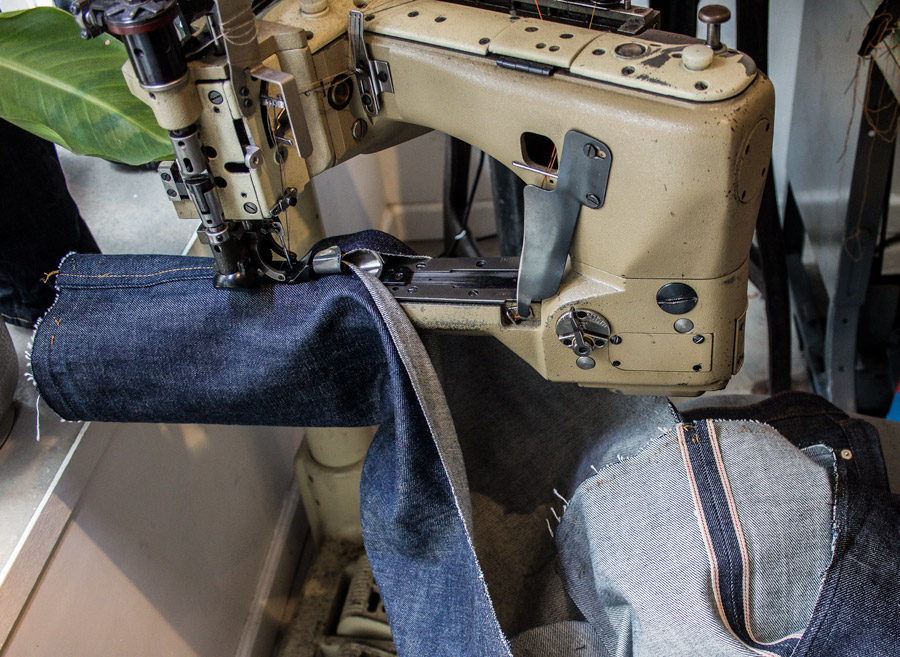
Pro Tip: If you frequently hem jeans, consider machines with a high presser foot lift and strong penetration force. This prevents skipped stitches and broken needles when working with thick seams.
Credit: denimbmc.com
Essential Features To Look For In A Sewing Machine For Pants
Choosing the right machine for pants means focusing on features that directly impact durability, ease of use, and versatility.
Motor Strength And Speed Control
A strong motor is vital for sewing through multiple fabric layers, especially in areas like hems and seat seams. Adjustable speed control allows for slow, precise stitching on tricky sections and faster sewing on straight seams.
Adjustable Presser Foot Pressure
Different fabrics require different amounts of pressure. Adjustable presser foot pressure ensures even feeding, prevents puckering on light fabrics, and avoids stretching or shifting.
Stitch Variety And Quality
Key stitches for pants include:
- Straight stitch (for main seams)
- Zigzag or stretch stitch (for knits and reinforcement)
- Overlock/serger stitch (for seam finishing)
Some machines offer programmable stitch sequences, which can be useful for decorative topstitching.
Free Arm And Extension Table
A free arm is indispensable for hemming or sewing narrow pant legs. An extension table supports large fabric pieces, maintaining accuracy.
Needle Positioning And Thread Cutter
Adjustable needle positions make topstitching and zipper insertion more precise. Automatic thread cutters save time, especially when sewing production-style batches.
Included Presser Feet
Look for machines that come with specialty feet:
- Zipper foot (for fly installation)
- Blind hem foot (for invisible hems)
- Edge/joining foot (for topstitching)
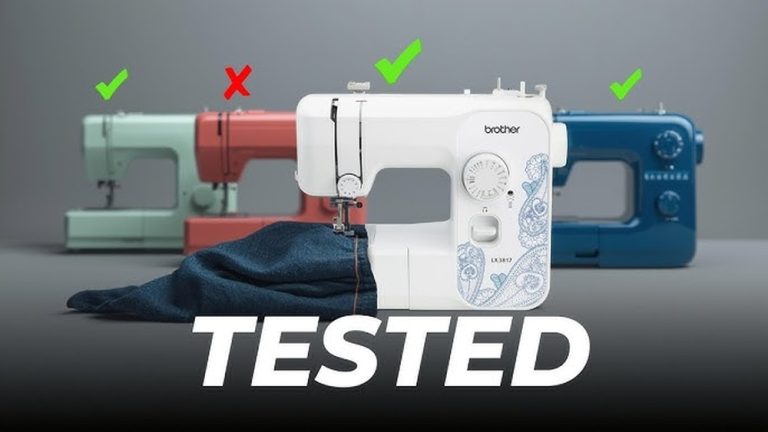
Example: When I tested the Brother ST150HDH for hemming denim jeans, its adjustable presser foot pressure and heavy-duty needle compatibility made a significant difference. The machine powered through thick seams without skipping, which isn’t always the case with lighter-duty machines.

Credit: sewcanshe.com
Top Sewing Machine Types For Pants: Comparison And Recommendations
Understanding the main types of sewing machines helps you match your needs to the right technology. Here’s a comparison of the most suitable machine types for pants:
| Machine Type | Best For | Key Features | Approx. Price Range |
|---|---|---|---|
| Mechanical | Beginners, Basic Projects | Simple controls, durable build | $100 – $400 |
| Computerized | Precision, Decorative Stitching | Programmable stitches, speed control | $200 – $1200 |
| Heavy-Duty | Denim, Workwear, Multiple Layers | Strong motor, metal chassis, high presser foot lift | $200 – $600 |
| Serger (Overlock) | Professional Seam Finishing | Simultaneous sewing/trimming/overlocking | $250 – $800 |
| Industrial | High Volume, Commercial Use | High speed, single purpose, robust build | $500 – $3000 |
Mechanical Vs. Computerized Machines
Mechanical machines offer reliability and simplicity, making them excellent for beginners and those mainly sewing straight seams. However, computerized machines provide advanced features like automatic buttonholes, programmable stitch patterns, and memory functions, ideal for detail-oriented pant construction.
Heavy-duty Machines For Denim And Workwear
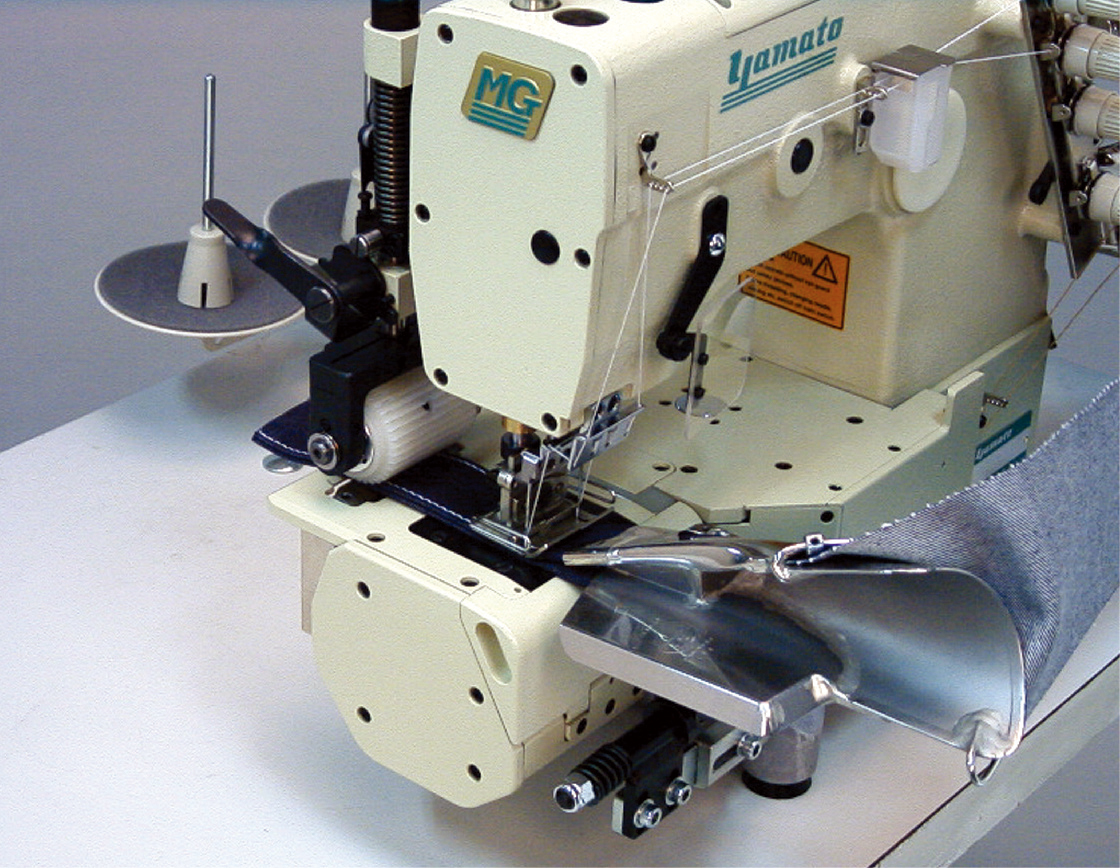
For sewing jeans, cargo pants, or canvas workwear, a heavy-duty machine is a must. These machines often feature all-metal interiors, higher stitching speeds, and better needle penetration.
Example: The Singer Heavy Duty 4452 is widely praised for effortlessly handling thick denim seams and multiple fabric layers.
Sergers For Seam Finishing
While not essential for basic construction, a serger (overlocker) produces professional-quality seam finishes, prevents fraying, and adds stretch to knit seams, perfect for activewear pants.
Industrial Machines For Professionals
Industrial sewing machines are designed for speed, consistency, and endurance. They are best suited for high-volume production or commercial tailoring shops, where speed and robust construction matter more than stitch variety.
Pro Tip: Don’t overlook the importance of power backup for computerized models. If you’re running a home sewing business, consider solutions like those discussed in Best Power Backup for Computerized Sewing Machine: Reliable AC Power Cords to prevent work interruptions.
Comparing Popular Sewing Machines For Pants: Features And User Experience
Here’s a side-by-side comparison of popular models that excel at sewing pants, based on user feedback and technical specs.
| Model | Type | Motor Power | Presser Foot Lift | Free Arm | Stitches | Price (approx.) |
|---|---|---|---|---|---|---|
| Brother ST150HDH | Computerized | Strong | High | Yes | 50 | $250 |
| Singer Heavy Duty 4452 | Mechanical | Very Strong | Extra High | Yes | 32 | $220 |
| Janome HD3000 | Mechanical | Strong | High | Yes | 18 | $400 |
| Juki MO654DE (Serger) | Serger | Strong | N/A | No | 2/3/4-thread | $350 |
| Juki DDL-8700 (Industrial) | Industrial | Very Strong | Very High | No | Straight | $800 |
User Experience Snapshots
- Brother ST150HDH: Users love the mix of strength and computerized features. Reports highlight smooth operation on both denim and lightweight pant fabrics.
- Singer Heavy Duty 4452: Highly rated for sewing through thick seams with minimal skipped stitches. Some find the included feet sufficient for all pant construction needs.
- Janome HD3000: Praised for reliability and simplicity. The extra-high presser foot lift is especially helpful on hems and belt loops.
- Juki MO654DE: Recognized for seam finishing, especially by small business owners making yoga pants and leggings.
- Juki DDL-8700: Professional tailors note its unmatched speed and consistency, though it lacks stitch variety.
For more options tailored to your expertise level, see Best Sewing Machines for Professionals 2026: Top Picks for Experts and Best Sewing Machine for Teenager 2026: Top Picks for Beginners.
Step-by-step Guide: Sewing Pants With The Right Machine
Having the right machine is only half the battle, using it correctly ensures professional results. This section walks you through the key steps and considerations for sewing pants.
1. Selecting The Right Needle And Thread
- Denim or heavy fabric: Use a size 16/100 or 18/110 needle and polyester thread.
- Lightweight fabrics: Use size 11/75 or 14/90 needles.
- Stretch fabrics: Opt for ballpoint needles and all-purpose polyester thread.
For more on needle sizing, consult How Do Sewing Machine Needle Sizes Work: Ultimate Guide for Perfect Stitches.
2. Preparing Fabric And Pattern
- Wash and press fabric before cutting to avoid shrinkage post-sewing.
- Lay out pattern pieces carefully, especially for directional prints.
- Mark darts, notches, and seam lines using tailor’s chalk or washable markers.
3. Constructing The Main Seams
- Set machine to a straight stitch, length 2.5, 3.0 mm for most fabrics.
- Sew inner and outer leg seams, reinforcing at the crotch by backstitching.
- For heavy fabrics, slow the speed and use a walking foot if available.
4. Assembling The Waistband And Hemming
- Attach waistband using a straight stitch, pressing seams open.
- For a professional finish, understitch the waistband facing.
- Hem pants using a blind hem stitch for dress pants or a double-fold topstitch for jeans.
5. Adding Zippers And Finishing Touches
- Use a zipper foot for front fly or side zippers.
- Topstitch pockets, belt loops, and fly areas for durability and style.
- Finish seams with a serger or zigzag stitch to prevent fraying.
Example: While sewing a pair of linen trousers, I found that switching to a lighter needle and adjusting presser foot pressure prevented puckering and uneven feeding, a simple adjustment with a big impact.
Common Pitfalls And How To Avoid Them
- Skipped stitches: Use the correct needle and thread for fabric thickness.
- Broken needles: Slow down over thick seams and use a hump jumper tool if necessary.
- Uneven hems: Use a seam gauge and keep the fabric flat and taut.
Pro Tip: Always test your stitch settings on a fabric scrap before sewing the actual pants. This simple step avoids irreversible mistakes.
Real-world Examples: Sewing Pants With Different Machines
Understanding how different machines perform in practice can inform your purchase and project decisions.
Example 1: Altering Jeans With A Heavy-duty Machine
A home sewist needed to hem several pairs of jeans. Using a Singer Heavy Duty 4452, she was able to power through the bulky side seams without skipped stitches or broken needles. The extra-high presser foot lift and denim needle made the process smooth, and the machine’s durability was a standout feature.
Example 2: Creating Dress Pants With A Computerized Machine
A tailoring student used a Brother ST150HDH to construct wool-blend dress pants. The precise stitch selection and adjustable speed allowed for intricate work on welt pockets and fly zippers. The automatic thread cutter sped up her workflow, and the free arm was invaluable for hemming.
Example 3: Producing Leggings With A Serger
A small business owner making custom leggings relied on a Juki MO654DE serger. The simultaneous sewing, trimming, and overlocking resulted in strong, stretchy seams. Production time was cut significantly, and customers appreciated the professional seam finish.
Maintenance And Troubleshooting For Sewing Machines Used On Pants
Routine maintenance ensures your sewing machine performs reliably, especially when tackling tough pant projects.
Cleaning And Oiling
- Remove lint and thread debris after every major project, especially when sewing denim or fleece.
- Oil the machine as recommended by the manufacturer.
Checking And Replacing Needles
- Change the needle every 8, 10 hours of sewing or after every major project.
- Using a dull or bent needle can damage fabric and the machine.
Tension And Feed Adjustment
- Adjust upper thread tension if stitches are loose or puckered.
- Clean the feed dogs to prevent fabric slipping.
Common Machine Issues With Pants
- Jammed bobbin: Often caused by sewing over thick seams too quickly.
- Skipped stitches on heavy fabric: Switch to a larger needle and slower speed.
For more troubleshooting, see How to Fix Sewing Machine Handwheel: Quick & Easy Repair Tips and How to Use Sewing Machine Properly: Expert Tips for Flawless Stitching.
Pro Tip: Keep a small sewing machine toolkit (screwdrivers, brush, extra needles) handy for quick fixes.
Advanced Techniques: Achieving Professional Results In Pant Construction
To take your pants to the next level, incorporate advanced techniques that enhance durability, appearance, and comfort.
Topstitching And Decorative Seams
- Use contrasting thread for visible topstitching on jeans.
- Increase stitch length (3.5, 4 mm) for bold lines.
Flat-felled And French Seams
- Flat-felled seams are common in jeans, adding strength and a clean finish.
- French seams work well for lightweight, unlined pants.
Blind Hemming For Dress Pants
- A blind hem foot and matching thread provide an invisible finish, preserving the pant’s clean lines.
Reinforcing Stress Points
- Bar tacks at pocket corners and crotch seams prevent tearing.
- Use a zigzag or triple-stitch for extra strength.
Example: In my experience, using a walking foot for matching plaid fabrics kept the pattern perfectly aligned, a detail that set my custom trousers apart from off-the-rack options.
Adding Linings And Pockets
- Partial linings in dress pants increase comfort and longevity.
- Experiment with different pocket styles (slant, welt, patch) for customization.
For more on choosing the right machine for specialized techniques, check out Best Sewing Machine for Applique 2026: Top Picks for Every Budget.
Choosing The Best Sewing Machine For Your Pant Projects: Buying Guide
With so many options, narrowing your choices can be daunting. Here’s a step-by-step approach to finding your ideal machine.
1. Define Your Primary Use
- Casual hemming and alterations: Mechanical or entry-level computerized machine.
- Custom garment creation: Computerized or heavy-duty machine.
- Production sewing: Industrial or high-speed heavy-duty machine.
2. Set Your Budget
- Entry-level machines start around $100.
- Mid-range heavy-duty or computerized models range from $200, $600.
- Industrial machines can exceed $1000 but offer unmatched speed and reliability.
3. Prioritize Essential Features
Make a checklist based on your projects:
- Strong motor
- Adjustable presser foot pressure
- Free arm
- Variety of included presser feet
4. Research User Reviews And Warranties
Look for consistent feedback on durability, ease of use, and after-sales support. Consider warranty length and availability of local service centers.
5. Test Before You Buy (if Possible)
If buying in-store, bring fabric samples for test sewing. Listen for smooth operation, check for skipped stitches, and assess ease of threading and adjustments.
Pro Tip: For those on a strict budget, see Best Bang for Your Buck Sewing Machine 2026: Top Affordable Picks and Best Sewing Machine for Under 100 in 2026: Top Budget Picks.
6. Consider Long-term Needs
Anticipate future projects. A slightly more advanced machine now may save you from needing to upgrade later.
For more guidance, explore How to Choose the Best Sewing Machine: Expert Tips for Perfect Picks.
Frequently Asked Questions
What Type Of Sewing Machine Is Best For Hemming Jeans?
For hemming jeans, a heavy-duty mechanical machine with a strong motor and high presser foot lift is ideal. This ensures the needle can penetrate thick denim seams without skipping or breaking. Machines like the Singer Heavy Duty 4452 or Janome HD3000 are popular choices for this task. Use a denim needle (size 16/100 or 18/110) and polyester thread for the best results.
Do I Need A Serger For Making Pants?
A serger is not required for constructing pants but is highly recommended for finishing raw edges, especially on woven fabrics prone to fraying. Sergers also add stretch to seams in knit pants, making them essential for activewear and leggings. If you want professional seam finishes and increased durability, investing in a serger like the Juki MO654DE is worthwhile.
How Do I Prevent Puckering When Sewing Lightweight Pant Fabrics?
To avoid puckering on lightweight fabrics:
- Use a fine needle (size 11/75 or 14/90).
- Reduce the presser foot pressure if your machine allows.
- Shorten the stitch length slightly.
- Use high-quality, lightweight polyester thread.
Testing your setup on a fabric scrap before starting is crucial for puckering prevention.
What Are The Most Common Mistakes When Sewing Pants And How Can I Avoid Them?
Common mistakes include:
- Using the wrong needle size or type, leading to skipped stitches or damage.
- Not reinforcing stress points like the crotch and pocket corners.
- Ignoring grainlines during cutting, which affects fit and drape.
- Skipping test stitches before starting on the actual fabric.
Careful preparation and using the correct machine settings for your fabric type can prevent these issues.
How Often Should I Service My Sewing Machine If I Sew Pants Regularly?
If you sew pants or other heavy garments regularly, service your machine every 6, 12 months. Frequent cleaning (removing lint, oiling moving parts) between professional services is essential, especially after projects involving denim or fleece. Check your manufacturer’s manual for specific guidelines, and seek authorized service for computerized or industrial machines.
For in-depth maintenance, see Wikipedia: Sewing Machine.